
Property Valuation Report Charges in India: A Complete Guide
Property valuation report charges in India are not fixed; they typically range depending on the property's type, location, and the valuation's purpose. The final cost is influenced by the property's complexity, the level of detail required for the report, and the valuer's credentials.
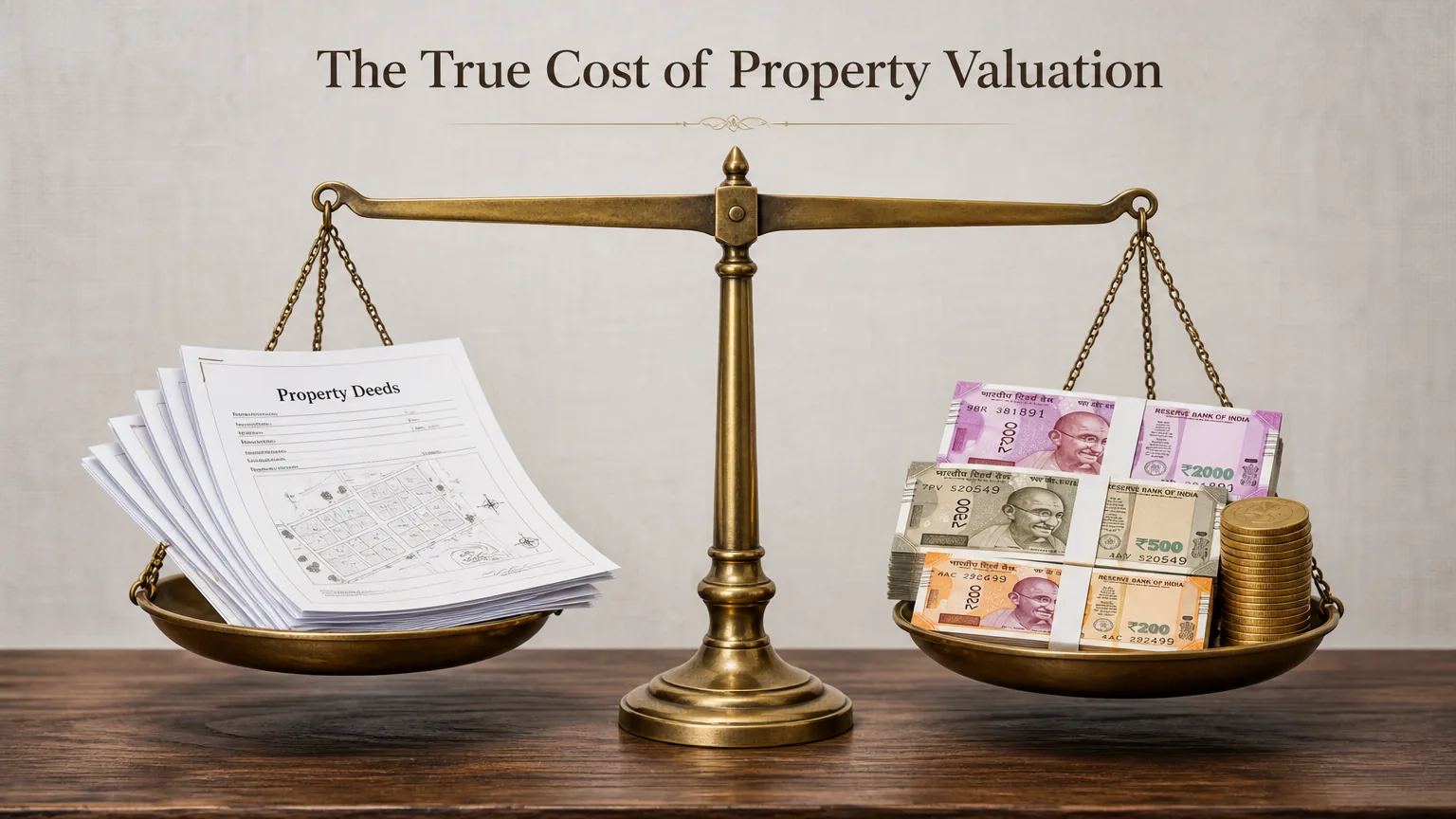
Property valuation report charges in India are not fixed; they typically range depending on the property's type, location, and the valuation's purpose. The final cost is influenced by the property's complexity, the level of detail required for the report, and the valuer's credentials.
What is a property valuation report and why do you need one?
A property valuation report is an official document that states the estimated market value of a property at a specific point in time. This is not just an opinion; it is a meticulously researched and professionally prepared assessment. You need a formal report for official submissions to banks for loans, courts for legal disputes, the Income Tax Department for capital gains or wealth tax, and embassies for visa applications. These institutions require a report from a qualified, government-approved valuer because they need a reliable, unbiased assessment of the property's worth. You cannot simply write down a number yourself.
The key factors that determine valuation report charges
The cost of a property valuation report is not a one-size-fits-all figure. Several critical factors influence the final charges. Understanding these helps you see why a precise quote requires specific details about your situation.
1. Purpose of the valuation
The reason you need a valuation significantly impacts its cost. A valuation for a visa application, for example, might focus on current market value for immigration purposes. A valuation for capital gains tax, especially for a property bought before April 2001, requires us to determine the Fair Market Value (FMV) as of April 1, 2001. This involves historical data research and specific calculations, making it more complex than a current market value assessment. Similarly, a valuation for a bank loan follows specific banking guidelines, while a court matter might demand a forensic level of detail. The specific legal and financial implications of each purpose dictate the scope of work and, consequently, the charges.
2. Type and size of the property
The nature and dimensions of the property are major cost drivers. Valuing a standard residential flat is generally less complex than valuing a large commercial building, an industrial plot with specialized machinery, or agricultural land. Different property types have their own valuation methodologies and market dynamics. For instance, agricultural land valuation might involve assessing soil quality, crop yield potential, and irrigation facilities, which are not relevant for a residential apartment. Larger properties, regardless of type, also require more extensive inspection and data analysis.
3. Location of the property
A property's location directly affects the availability of market data and the ease of physical inspection. Valuing a property in a well-developed urban metro like Mumbai or Delhi, where market transactions are frequent and data is readily available, can be more straightforward than valuing one in a remote rural area or a smaller Tier-2 city. In less developed areas, gathering comparable sales data can be challenging, requiring more extensive local research. Accessibility to the property also plays a role in determining the valuer's travel time and associated costs.
4. Complexity and scope of work
Some properties present unique challenges that increase the valuation's complexity. This could include properties with multiple structures, ongoing legal disputes, or properties with non-standard construction. For capital gains purposes, if the property was property bought before April 2001 you need an FMV as of April 1, 2001. This requires specialized expertise and access to historical market data, which adds to the work involved. Any requirement for specific methodologies or detailed reporting beyond a standard format will also influence the overall charges.
5. The valuer's credentials and experience
This is a crucial factor. The expertise and official recognition of the valuer directly impact the report's credibility and acceptance by official bodies. Using a Government Approved and IBBI Registered Valuer, like Rao Valuers, ensures your report meets the highest standards. Rao Valuers adheres to strict professional and ethical guidelines set by the Insolvency and Bankruptcy Board of India (IBBI). Our reports are legally defensible and accepted by all major institutions. Cheaper, unapproved valuers might offer lower prices, but their reports are often rejected, which wastes time and money and can create legal problems. With 35 years of experience, Rao Valuers knows what is required for your report to pass scrutiny.
Comparing valuer types: why credentials impact cost
Choosing the right valuer is about more than just cost; it is about ensuring your report is accepted and serves its intended purpose.
| Feature | Government Approved & IBBI Registered Valuer (e.g., Rao Valuers) | Unregistered/Unapproved Valuer | Self-Assessment/Online Calculator |
|---|---|---|---|
| Typical Cost | Moderate to High | Low | Free / Very Low |
| Acceptance by Banks | Yes | No | No |
| Acceptance by Courts | Yes | No | No |
| Acceptance for Visas | Yes | No | No |
| Income Tax Dept. Validity | Yes | No | No |
| Legal Accountability | High (Regulated by IBBI) | None | None |
| Best For | All official purposes: loans, tax, legal, immigration. | Informal personal assessment only. | Rough estimates, not for official use. |
What is included in the valuation fee?
When you pay for a property valuation report from a reputable firm, you are paying for more than just a piece of paper. You are investing in a service that includes expertise and legal compliance. Here is what a valuation fee typically covers:
The physical inspection
Rao Valuers' valuers conduct a detailed physical inspection of the property. This involves measuring dimensions, noting construction quality, assessing the condition of the structure, identifying any unique features, and documenting the surrounding environment. This on-site visit is critical for an accurate assessment and cannot be skipped.
Market research and data analysis
After the inspection, Rao Valuers' team performs extensive market research. This includes gathering comparable sales data for similar properties in the area, analyzing current market trends, and considering economic factors that might influence property values. For specific purposes, like visa application or capital gains, specialized data collection and analysis are performed. Rao Valuers' 35 years of experience give them access to a vast database of historical and current market information.
The comprehensive written report
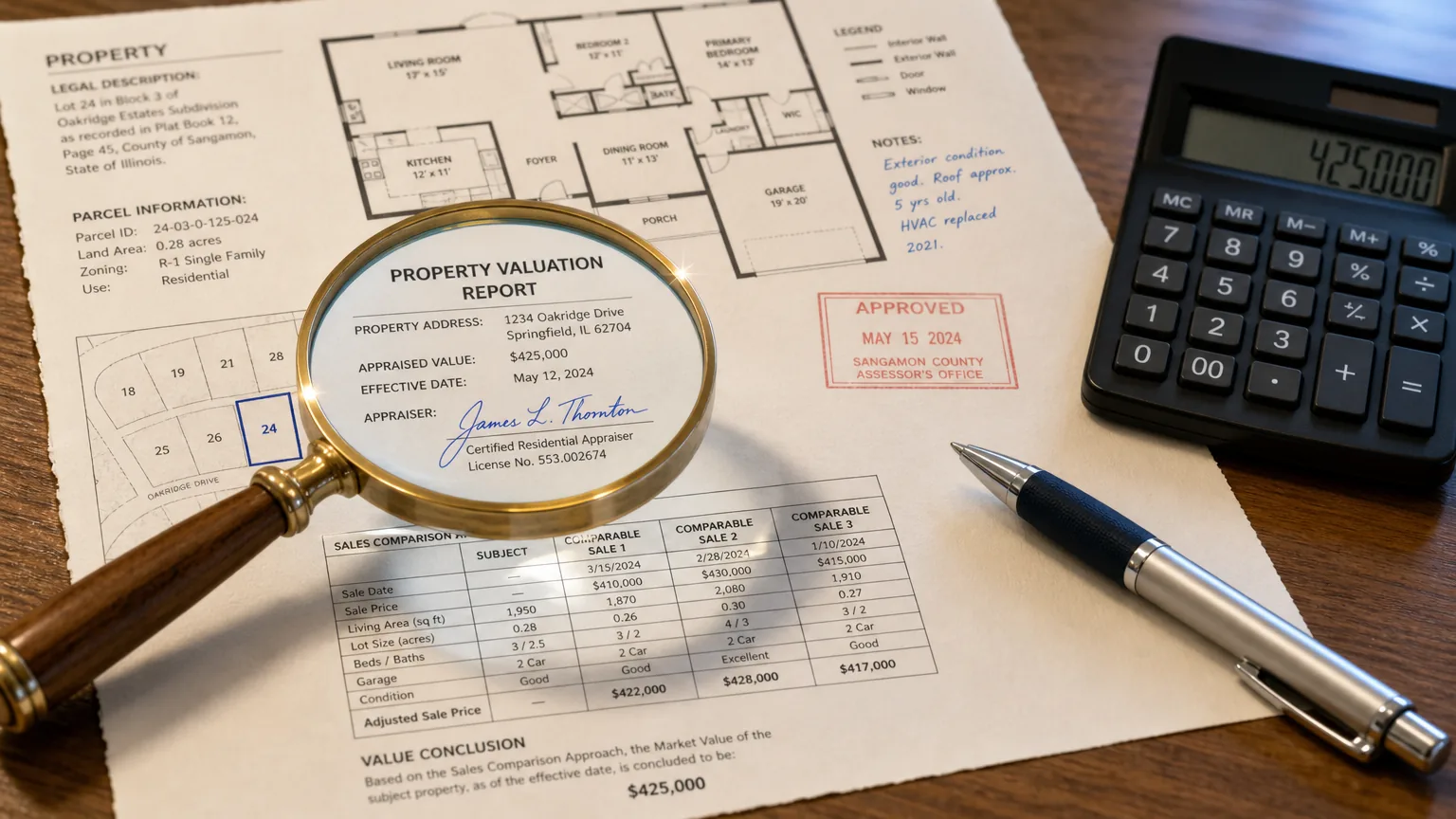
The core output is a detailed, comprehensive written report. This document includes a description of the property, the methodology used for valuation, the market data considered, photographs, and the final valuation figure. It is prepared in a format accepted by the requesting authority (bank, court, Income Tax Department, embassy) and includes all necessary disclaimers and certifications. As IBBI registered valuers (our registration number is IBBI/RV/02/2019/10843), Rao Valuers ensures its reports meet all regulatory requirements.
The valuer's professional indemnity and legal standing
Choosing Government Approved Property Valuers means you benefit from professional indemnity insurance. This protects you in case of any professional negligence. Also, the legal standing as regulated valuers means reports carry significant weight and are rarely questioned by official bodies. This provides peace of mind and avoids potential delays or rejections.
> Work with Rao Valuers
>
> Get a free valuation quote →
How Rao Valuers provides a transparent quote
Rao Valuers understands that you need clarity on costs. That is why they follow a transparent process to provide you with a precise, no-obligation quote. They will ask for key details about the property's type, location, and the valuation's purpose.
Once Rao Valuers has this information, their team of 40+ expert valuers assesses the scope of work involved. They consider all the factors discussed above to determine the complexity and resources required. Based on this assessment, they provide you with a firm quote. There are no hidden charges. Rao Valuers prides itself on delivering reports quickly, typically within 48 to 72 hours after the valuation is completed and all necessary documents are provided.
Ready to get a precise, no-obligation quote for your property valuation? Contact Rao Valuers' team on WhatsApp for a free consultation. They reply in minutes.
Frequently Asked Questions about Valuation Charges
1. How much does a valuation report for a home loan cost?
The cost for a home loan valuation report varies. It depends on the property type, its location, and the bank's specific requirements. Banks usually mandate that the valuation be done by their empaneled government-approved valuers.
2. What are the charges for a property valuation report for a Canada/Australia visa?
For visa applications to countries like Canada or Australia, the charges for a property valuation report depend on the property's nature, its location, and the level of detail required by the embassy or immigration authority. It is essential to use a government-approved valuer whose reports are accepted internationally.
3. Is there a standard government fee for property valuation?
No, there is no single standard government fee for property valuation. While the government regulates valuers and sets guidelines, the actual charges are determined by the individual valuer based on the scope of work, property characteristics, and market conditions. However, government-approved valuers adhere to ethical pricing practices.
4. Can I get a free property valuation report?
You can get rough estimates from online calculators or real estate agents, but these are not official valuation reports and will not be accepted by official bodies like banks or courts. A formal, legally valid property valuation report requires a physical inspection and detailed analysis by a qualified valuer, which incurs a professional fee. Rao Valuers offers a free consultation and a no-obligation quote, but not a free report.
5. Why is an IBBI registered valuer more expensive?
An IBBI registered valuer is regulated by the Insolvency and Bankruptcy Board of India and adheres to stringent professional and ethical standards. Their reports are legally defensible, carry professional indemnity insurance, and are accepted by all official bodies. This higher level of accountability and expertise justifies the cost compared to unregistered valuers whose reports often get rejected.
6. How long does it take to get the valuation report once I approve the quote?
Once you approve Rao Valuers' quote and provide all necessary documents, their valuers typically deliver the comprehensive report within 48 to 72 hours after completing the physical inspection. This turnaround time can sometimes vary slightly based on the property's complexity and specific client requirements.
Checked by Parish Rao, Chartered Engineer and Government Approved Valuer (Registration number CAT-I/443/117/2000-01).
Page last checked on 8 November 2026.
Get a free valuation quote
Tell us what you need valued. We will message you on WhatsApp with which report you need and what it costs, free of charge.
In a hurry? Call +91 98681 69747 instead.