
Inherited Property Valuation: Your Guide for 2026
For inherited property in India, you need a valuation report from a Government Approved Valuer registered with the IBBI. This report is essential for calculating capital gains, finalizing family settlements, or applying for visas.
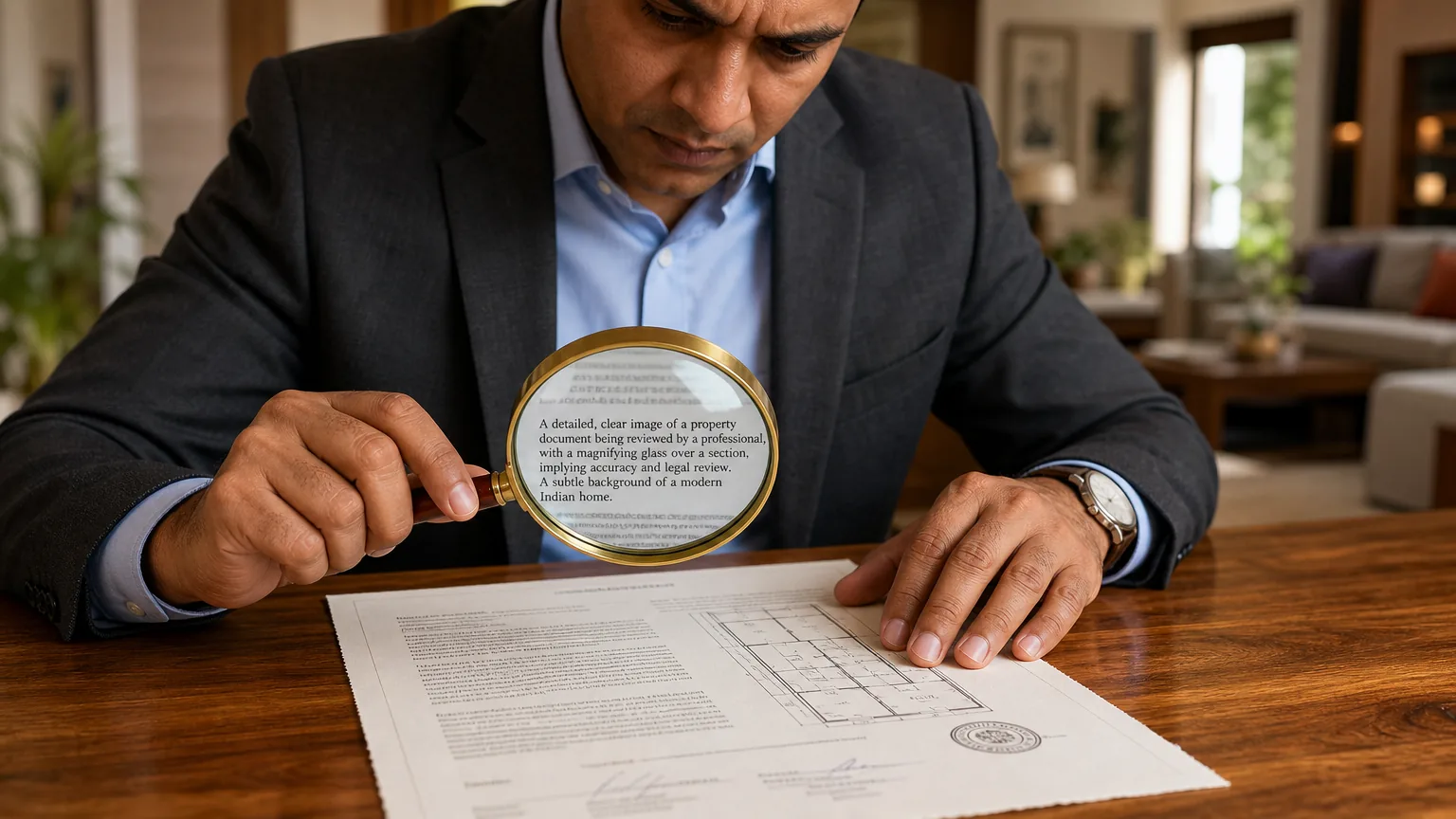
For inherited property in India, you need a valuation report from a Government Approved Valuer registered with the IBBI. This report is essential for calculating capital gains, finalizing family settlements, or applying for visas. Rao Valuers provides certified, legally compliant valuation reports across India, typically within 48 to 72 hours.
Rao Valuers has seen firsthand the complexities that come with inherited property. For over 35 years, the firm has guided countless families through the often sensitive process of valuing assets passed down through generations. It is not just about assigning a number; it is about providing a legally sound and accurate assessment that stands up to scrutiny from official bodies, including tax authorities and courts.
This article explains inherited property valuation in India for 2026. We will cover why you need a valuation, the official process, how to choose the right service, and what factors determine your property's worth.
Why you need a valuation for inherited property

Inheriting property is a significant event, but it often comes with administrative and financial responsibilities. A professional valuation report from a government approved valuer is not an optional extra; it is a fundamental requirement for many critical processes.
Calculating capital gains tax on sale
One of the most common reasons clients approach us for inherited property valuation is to calculate capital gains tax when they decide to sell. If you sell an inherited property, you are liable for capital gains tax on the profit you make. The profit is the difference between the sale price and the cost of acquisition. For inherited properties, the "cost of acquisition" is often the fair market value (FMV) on a specific date, particularly if the property was acquired before April 1, 2001.
Without an official valuation report, you cannot accurately determine this base cost, which can lead to incorrect tax calculations and potential penalties from the Income Tax Department. An accurate capital gains valuation helps you legally minimize your tax liability by establishing the correct indexed cost of acquisition.
Fair division in a family settlement or partition
When multiple heirs inherit a property, dividing it fairly can be challenging, especially if the property cannot be physically split. A professional valuation provides an objective assessment of the property's market value. This report becomes the neutral ground for all parties, ensuring a fair process for reaching a family settlement or partition. It avoids disputes and ensures that each heir receives their equitable share, whether through direct ownership or monetary compensation. Without this, emotional attachments or differing perceptions of value can quickly derail discussions.
Applying for visas or immigration (e.g., proving net worth)
Many countries require visa applicants, especially those seeking investor visas or permanent residency, to prove their net worth. Inherited property often forms a substantial part of an individual's assets. An official valuation report from an IBBI registered valuer is typically required by embassies and immigration authorities to substantiate the value of your real estate holdings. Our reports are designed to meet these stringent international standards for visa and immigration purposes.
Updating official records or transfer of title
After inheritance, the property's title needs to be transferred to the new owners. While the primary documents for this are the Will or succession certificate, a valuation report might be required by local municipal bodies or revenue authorities to update records, especially if there is a change in the property's assessed value for tax purposes. It ensures that the new ownership records accurately reflect the property's current standing.
Securing a loan against the property
If you plan to take a loan against your inherited property, banks and financial institutions will always require a valuation report. This report helps them determine the loan-to-value (LTV) ratio, which is the maximum amount they can lend against the property. A government-approved valuation assures the bank of the property's true market worth, which is crucial for their risk assessment.
The official process: How to get inherited property valued in India
Getting an inherited property valued in India involves a structured process to ensure accuracy and legal compliance. Here is how we approach it:
Step 1: Identify the correct type of valuer (The role of IBBI)
This is the most critical first step. For official purposes like tax filings or court matters, you cannot rely on an estimate from a local real estate agent. You need a valuation report from a Government Approved Valuer. These valuers are regulated by the Insolvency and Bankruptcy Board of India (IBBI). The IBBI sets standards and maintains a register of qualified valuers for different asset classes, including land and building. It is crucial to verify your valuer's credentials on the official IBBI website (ibbi.gov.in). This ensures their report will be accepted by all relevant authorities.
Step 2: Gather your documents (Sale Deed, Inheritance Proof, etc.)
Before we begin the valuation, we will request a set of essential documents. These typically include:
- Proof of Inheritance: This could be a Will, Succession Certificate, Legal Heir Certificate, or a Partition Deed.
- Property Title Documents: The original sale deed or conveyance deed of the property.
- Property Tax Receipts: Recent receipts to confirm ownership and tax payment status.
- Approved Building Plan: If it is a constructed property.
- Encumbrance Certificate: To check for any legal liabilities on the property.
- Any previous valuation reports: If available, these can provide historical context.
The more complete your documentation, the smoother and faster the valuation process will be.
Step 3: The site visit and inspection
Once we have the necessary documents, our qualified valuer will schedule a physical inspection of the property. This is a non-negotiable step for an accurate valuation. During the site visit, the valuer will:
- Measure the property dimensions.
- Assess the quality of construction, age, and current condition of the building.
- Note the property's exact location, accessibility, and proximity to amenities.
- Observe the surrounding infrastructure and neighborhood development.
- Identify any unique features or potential issues that could affect value, such as structural defects or encroachment.
This detailed physical assessment forms the backbone of our valuation report, ensuring it is grounded in reality, not just theoretical data.
Step 4: Receiving and understanding your valuation report
After the site visit and thorough analysis, we compile a detailed valuation report. This report is not just a single number; it is a detailed document that includes:
- The purpose of the valuation.
- The date of valuation.
- A description of the property.
- The methodologies used (e.g., comparative sales method, cost method, income method).
- Detailed calculations and justifications for the determined value.
- Photographs of the property.
- Our valuer's credentials and IBBI registration number.
We ensure the report is clear and easy to understand, providing all the necessary information for its intended official use.
Who can value inherited property? Choosing the right service
When it comes to valuing inherited property, distinguishing between different types of "valuations" is crucial. A simple estimate from a local real estate agent, while useful for a quick idea of market trends, holds no legal standing for official purposes. These estimates are informal and cannot be submitted to tax authorities, courts, or embassies.
For any legal, tax, or official requirement, you need a report from a Government Approved Valuer. These professionals are regulated by the IBBI (Insolvency and Bankruptcy Board of India) and follow strict guidelines and methodologies. Their reports carry legal weight and are accepted by government bodies. You can always verify a valuer's credentials on the IBBI website (ibbi.gov.in).
Here is a comparison to clarify the differences:
| Feature | Government Approved Valuer (e.g., Rao Valuers) | Local Real Estate Agent | Online Valuation Tool |
|---|---|---|---|
| Legal Validity | High (Accepted by tax, court, and visa authorities) | None | None |
| Governing Body | IBBI (Insolvency and Bankruptcy Board of India) | None | None |
| Report Purpose | Capital gains, visa, court, family settlement | Informal price estimate for listing | Rough market estimate only |
| Accuracy | Based on physical inspection and certified methods | Based on recent local sales, often informal | Algorithmic, cannot account for property condition |
| Typical Cost | Varies by property size and location | Often free, hoping for a sales commission | Free or low-cost subscription |
While some online estimators exist, these tools provide a very rough algorithmic estimate and cannot account for the unique characteristics or condition of an individual property, let alone provide a legally defensible report. Choosing an IBBI registered valuer is about ensuring accuracy and reliability.
Key factors that determine your inherited property's value
Several factors influence the valuation of an inherited property. Our valuers consider a holistic view to arrive at an accurate and defensible number.
Fair Market Value (FMV) as on April 1, 2001 (for capital gains)
This is a critical concept, especially for properties acquired before April 1, 2001. For capital gains tax calculation, if you inherited a property that was originally acquired by your predecessor before this date, you have the option to take the FMV as of April 1, 2001, as your cost of acquisition. This allows you to benefit from indexation from that date, significantly reducing your capital gains tax liability. The Income Tax Act specifically allows this, and an IBBI registered valuer is the only authority who can certify this historical FMV. This is where our expertise truly helps reduce your capital gains tax.
Current market value
This refers to the most probable price a property would fetch in a competitive and open market, given all conditions requisite to a fair sale, the buyer and seller each acting prudently and knowledgeably, and assuming the price is not affected by undue stimulus. This is determined by analyzing recent sales of comparable properties, current market trends, and economic indicators.
Property location and neighborhood development
Location is always paramount in real estate. A property's value is significantly impacted by its proximity to schools, hospitals, and commercial centers. A property in a rapidly developing area will naturally command a higher value than one in a stagnant or declining neighborhood. We carefully assess the local micro-market.
Property age, condition, and quality of construction
The physical attributes of the property play a major role. A newly constructed or well-maintained property will be valued higher than an older one requiring significant repairs. The quality of materials used, the structural integrity, and the overall aesthetic appeal all contribute to its market desirability and, consequently, its value. Our valuers conduct a thorough physical inspection to assess these aspects.
Legal encumbrances or tenancy status
Any legal issues, such as disputes over title, mortgages, or other charges on the property (encumbrances), can reduce its market value. Similarly, if the property is occupied by tenants, especially those with long-term leases or protected tenancy rights, it can affect its immediate marketability and value compared to a vacant property. We factor in all such legal aspects into our assessment.
> Work with Rao Valuers
>
Our experience with inheritance valuation
With over 35 years in the field, our team of 40+ valuers has prepared thousands of reports for inherited properties. We understand the nuances and sensitivities involved when dealing with family assets. Our experience spans across residential, commercial, and industrial properties, both urban and rural, throughout India.
We are registered with the IBBI and hold an ISO 9001 certification, ensuring our reports meet the highest legal and quality standards. This means that when you receive a report from Rao Valuers, you can be confident it will be accepted by banks, tax authorities, and courts without question. Our reports go through banks, tax offices, and courts without coming back with questions.
We understand these matters are often time-sensitive, which is why we deliver most inheritance valuation reports within 48 to 72 hours. Our process is streamlined to provide you with an accurate, legally compliant valuation as quickly as possible. We also prioritize 100% data security for all your sensitive documents and property details. Our deep understanding of tax regulations, including the intricacies of the Income Tax Act for properties acquired before 2001, ensures that our valuations are optimized to benefit you, particularly in capital gains calculations.
Frequently Asked Questions (FAQ)
What documents are required for an inherited property valuation?
You will typically need proof of inheritance (Will, Succession Certificate, Legal Heir Certificate), the original sale deed or title documents, property tax receipts, approved building plans (if applicable), and an encumbrance certificate. The more complete the documentation, the smoother the process.
How much does a property valuation for inheritance cost in India?
The cost of a property valuation in India varies depending on the property's location, type, and size. We provide a transparent, no-obligation quote after understanding your specific requirements. It is an investment that can save you significant amounts in taxes or prevent future disputes.
Is the valuation report valid for income tax purposes?
Yes, a valuation report issued by an IBBI registered Government Approved Valuer is legally valid and accepted by the Income Tax Department for purposes like capital gains calculation and other compliance requirements. This is a core service we provide, ensuring your report meets all income tax regulations.
What is the difference between Fair Market Value (FMV) and market value?
Market value refers to the current price a property would fetch in the open market. Fair Market Value (FMV), particularly in the context of inherited property for capital gains, refers to the value as on a specific historical date, most commonly April 1, 2001, for properties acquired before that date. This historical FMV is used as the base cost for calculating indexed capital gains.
My inherited property is in a different city. Can you still value it?
Yes, our network of valuers across India allows us to conduct valuations for inherited properties in various cities and regions. We have a pan-India presence and can handle properties located anywhere in the country.
How long does the valuation process take from start to finish?
Typically, once we have all the required documents and access to the property for inspection, we can deliver the comprehensive valuation report within 48 to 72 hours. We understand that these matters are often time-sensitive, and we strive for efficiency without compromising accuracy.
If you need a legally compliant and accurate valuation for your inherited property, our team of government-approved valuers is here to help. Contact us today for a free, no-obligation consultation and quote. We will respond on WhatsApp, usually within minutes.
Checked by Parish Rao, Chartered Engineer and Government Approved Valuer.
Page last checked on 25 September 2026.
Get a free valuation quote
Tell us what you need valued. We will message you on WhatsApp with which report you need and what it costs, free of charge.
In a hurry? Call +91 98681 69747 instead.