
Court Property Valuation: Your Expert Guide (2026)
Navigating property disputes in court can be really stressful, especially when it involves family or significant assets. I'm Parish Rao, founder of Rao Valuers. My team and I understand that you need clear, reliable information and a valuation report that the court will accept without question.
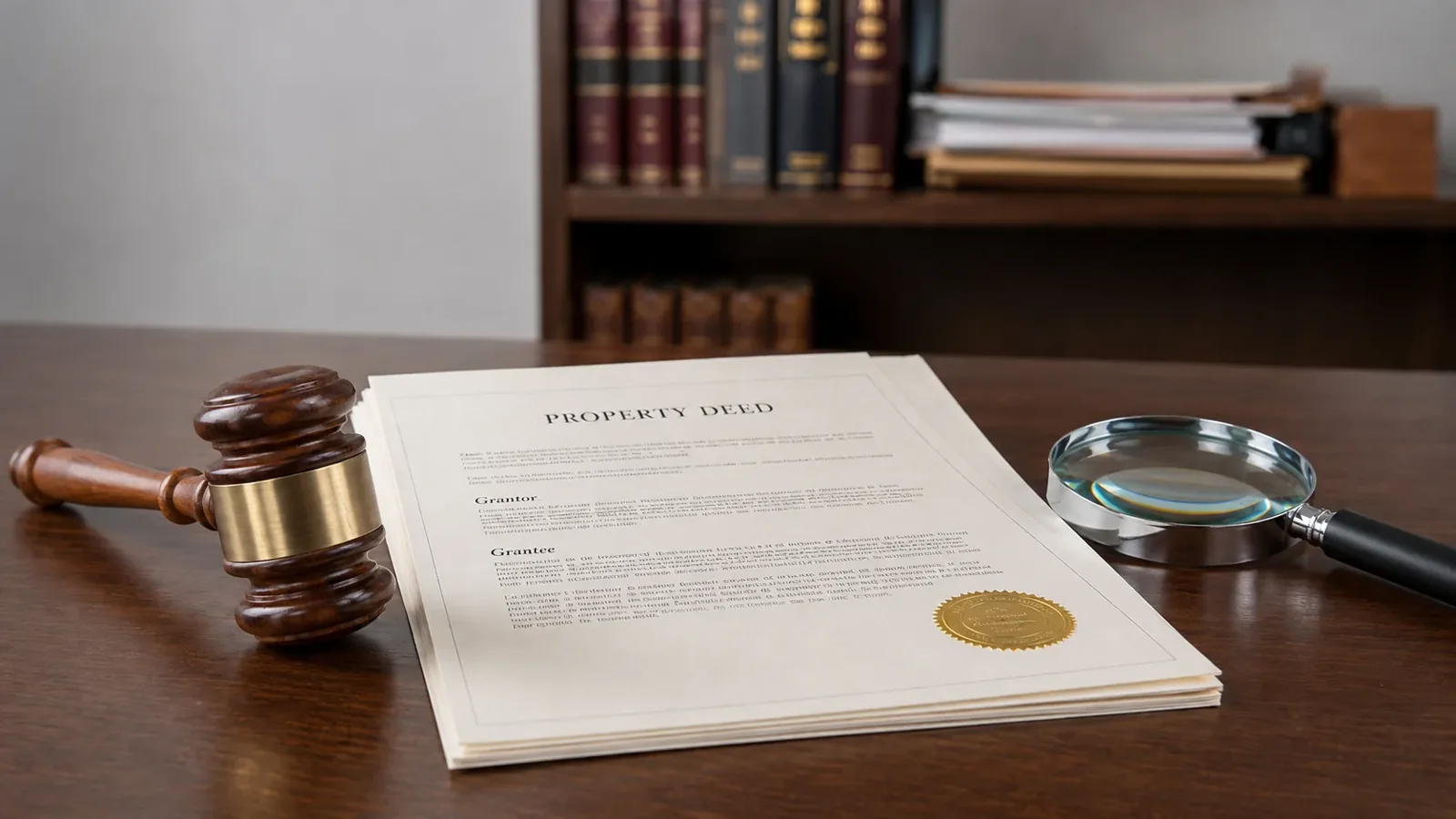
Expert Property Valuation Report for Court Proceedings, Your Complete Guide
Navigating property disputes in court can be really stressful, especially when it involves family or significant assets. I'm Parish Rao, founder of Rao Valuers. My team and I understand that you need clear, reliable information and a valuation report that the court will accept without question. This guide will walk you through exactly what a court property valuation report is, why it's crucial, and how we prepare it to meet strict legal standards.
Why Do Courts Require a Property Valuation Report?
Courts need an objective, impartial property valuation to make fair decisions in many kinds of disputes. Think about cases like dividing inherited property, settling assets during a divorce, determining fair compensation for land acquisition, or even enforcing a mortgage. Without a professional, unbiased valuation, it's just one person's word against another's.
A court-ordered valuation carries legal weight only if it comes from a government-approved or registered valuer. This means someone recognized under laws like the Companies Act, the Income Tax Act, or by a recognized professional body. This ensures the valuation is credible and stands up in court.
What Makes a Valuation Report "Court-Admissible"?
For a valuation report to be accepted as evidence in court, it has to meet specific criteria. It's not just any valuation; it needs to be robust and legally sound.
First, it must be prepared by a valuer registered with the Income Tax Department, IBBI (Insolvency and Bankruptcy Board of India), or recognized as a government-approved valuer. This credential is non-negotiable.
Second, the report must follow standard valuation methods like the cost approach, income approach, or market comparison approach. Crucially, it needs to detail the reasoning behind the chosen method and the calculations.
Third, every report must include a signed certificate of valuation, photographs of the property, a site plan, area calculations, and comparable market data to support the value.
Finally, it has to be independent and unbiased. The valuer must declare no conflict of interest, ensuring their opinion is purely professional and not influenced by any party in the dispute.
How Does Rao Valuers Meet the Legal Standards for Court Property Valuations?
At Rao Valuers, we pride ourselves on meeting and exceeding these legal standards. We hold government-approved valuer credentials. For instance, we are registered under Section 247 of the Companies Act and empaneled with numerous nationalized banks. Our team includes valuers registered under the Income Tax Act, 1962 (Rule 8AA), and IBBI (where applicable).
All our reports are prepared by certified valuers who have extensive experience with legal documentation and court submissions. We make sure our reports include all mandatory annexures, such as title deed reviews, detailed physical inspection notes, locality analysis, and depreciation calculations.
Our reports are specifically formatted to be directly filed as evidence in civil courts, family courts, revenue courts, and high courts across India. We understand what courts look for.
What Types of Court Cases Commonly Require a Valuation Report?
You'd be surprised how often a professional valuation becomes essential in legal proceedings. Here are some common types:
- Partition suits: When family or joint property needs to be divided among co-owners.
- Divorce settlements: To fairly value matrimonial assets for division.
- Land acquisition compensation disputes: Ensuring fair compensation under acts like the LARR Act.
- Mortgage/foreclosure cases: For banks to assess the property value when a borrower defaults.
- Probate and inheritance: Valuing an estate for distribution among heirs.
- Tax-related appeals: Challenging capital gains tax or wealth tax assessments.
- Arbitration and mediation proceedings: Providing an objective basis for dispute resolution outside of court.
What Is the Step-by-Step Process to Get a Court-Approved Valuation Report from Rao Valuers?
We've streamlined our process to be as clear and efficient as possible for you.
1. Case Intake: You share your court order or notice that requires the valuation. (Even without a court order, we can prepare reports for legal purposes.)
2. Document Collection: We'll ask for essential documents like the property title deed, encumbrance certificate, tax receipts, and any approved plans if you have them.
3. Physical Inspection: Our valuer will visit the property. They'll take photographs, measure the area, note its condition, and identify comparable properties nearby.
4. Market Research & Analysis: We then gather recent sale deeds, check circle rates, rental data, and analyze current market trends in your property's locality.
5. Valuation Calculation: Using appropriate methods (market comparable for residential, income method for commercial, cost method for new construction), we calculate the property's value.
6. Report Preparation: We draft the full report, including all sections, detailed explanations, and annexures.
7. Quality Check & Sign-off: A senior valuer reviews the report thoroughly. The final report is then signed and stamped with our valuer’s registration number.
8. Delivery: You receive a soft copy and, if needed, hard copies with the certificate, ready for court filing.
What Credentials Should a Court Valuer Hold? (And How Rao Valuers Matches Them)
When a court needs a valuation, they're looking for specific credentials to ensure credibility.
- Government recognition: The valuer must be registered under a government scheme, like the Income Tax Act, 1962 (Rule 8AA), or the IBBI.
- Experience: They should have a good number of years in practice, especially handling litigation-related valuations.
- Independence: Crucially, they must have no relationship with any of the parties involved and their fees cannot be contingent on the outcome of the case.
At Rao Valuers, all our valuers are empaneled with multiple banks and government departments. We have a strong track record of reports consistently accepted by courts across India without objection. We understand the importance of these credentials for your case.
How Long Does It Take to Prepare a Court-Ready Valuation Report? (Expected Timeline)
We know court cases often have deadlines. Here's what you can expect:
- Standard property (residential flat or plot): Typically 3-5 working days after the physical inspection.
- Complex commercial or industrial property: This might take a bit longer, usually 5-7 working days.
If your case is urgent, please let us know. We offer priority service to expedite reports when necessary.
> Work with Rao Valuers
>
What Documents Do You Need to Provide to Start the Process?
To get started quickly, please provide these documents:
- A copy of the court order or notice (if the valuation is court-mandated).
- Property documents: the title deed, the latest tax receipt, and an encumbrance certificate.
- Any previous valuation reports, especially if they are being contested.
- Photographs of the property (optional, but very helpful).
- Contact details for arranging property access for inspection.
How Much Does a Court Valuation Report Cost? And What Affects the Price?
The cost of a court valuation report varies. It depends on the property's value, type (residential, commercial, industrial), location, and how complex the valuation is.
For a standard residential property in a metro area, you might expect a range of ₹5,000 to ₹15,000. Commercial or large land parcels will naturally cost more due to the increased complexity. We believe in transparent pricing. We'll give you an upfront quote after our preliminary discussion, so there are no hidden charges. It's also worth noting that in many legal cases, the cost of the valuation can be recoverable as part of court costs or from the losing party.
Frequently Asked Questions About Court Property Valuation Reports
Q: Can I use a general valuation report for court?
A: Only if the valuer is government-approved and the report explicitly states it is prepared for legal purposes. Most standard valuations lack the specific documentation and rigor required for court evidence.
Q: Is it mandatory to have the valuation done by a registered valuer?
A: Yes, absolutely. Courts generally require reports from a valuer registered under the Income Tax Act or IBBI. Reports from unregistered valuers are at high risk of being rejected.
Q: Will the court accept a digital copy of the valuation report?
A: Many courts are moving towards digital submissions. We provide both signed hard copies and PDFs with digital signatures, ensuring compliance.
Q: Can I object to the other party's valuation report?
A: Yes, you can. If you disagree with an opponent's valuation, you can file a counter-report prepared by an independent, government-approved valuer. Rao Valuers can assist you in reviewing and challenging opponent reports.
Q: How long is the valuation report valid?
A: Typically, a valuation report is considered valid for 6-12 months. This depends on market fluctuations and the specific requirements of the court. If your case is delayed, a re-valuation might be needed.
Why Choose Rao Valuers for Your Court Property Valuation?
Choosing the right valuer for a court case is a critical decision. Here's why Rao Valuers stands out:
- Government-approved credentials: We are registered under the Income Tax Act, empaneled with nationalized banks, and our team includes IBBI-registered valuers.
- Pan-India presence: We cover all states and union territories, so you don't need to find a local valuer for every location.
- Experienced with court submissions: We have extensive experience with High Court and District Court submissions and understand all court formatting requirements.
- Transparent process: You'll receive a detailed, itemized report with clear explanations, photographs, and comparable data.
- Confidentiality guaranteed: We ensure complete data security and non-disclosure for your sensitive legal matters.
- Free initial consultation: We offer a free initial consultation to discuss your specific case and determine the exact type of report you need.
We are valuers, not lawyers. For legal strategy, please consult your advocate.
Ready to Start? Contact Rao Valuers Today for a Court-Admissible Property Valuation Report
Let's get your court-ready valuation report done right.
Please contact us via phone, WhatsApp, email, or by visiting our office.
You can also use our online form to request a callback. Please mention your court case details for a priority quote.
Contact Rao Valuers for a free consultation
Checked by Parish Rao, Chartered Engineer and Government Approved Valuer.
Page last checked on 6 September 2026.
Get a free valuation quote
Tell us what you need valued. We will message you on WhatsApp with which report you need and what it costs, free of charge.
In a hurry? Call +91 98681 69747 instead.