
Property for Visa: How to Prove Financial Assets in 2026
Applying for a visa can feel like navigating a maze, especially when it comes to proving you have enough money. Many applicants overlook a significant asset they already own: their property.
TL;DR: To use your property as proof of financial assets for a visa application, you need a government-approved property valuation report from a certified valuer. This official document proves your net worth and financial solvency to visa officers. RaoValuers delivers these critical reports in just 48-72 hours, ensuring your application moves forward quickly.
How to Use Your Property to Prove Financial Assets for a Visa Application in 2026
Applying for a visa can feel like navigating a maze, especially when it comes to proving you have enough money. Many applicants overlook a significant asset they already own: their property. Yes, your home, land, or commercial real estate in India can be a powerful tool to demonstrate your financial standing for various visa applications.
This guide will walk you through exactly how to use your property to meet visa financial requirements. We will cover what visa officers look for, the specific documents you need, and how to get them quickly and reliably. With 35 years of experience, RaoValuers understands the nuances of official property valuations for international purposes.
Why Visa Officers Accept Property as Proof of Financial Assets
Visa officers need assurance that you can support yourself financially during your stay in their country, or that you have strong ties to your home country, reducing the risk of overstaying. While liquid assets like bank balances are often preferred, property serves as a strong indicator of net worth and financial stability.
Here is why property is accepted:
- Demonstrates Substantial Net Worth: Property, especially in major Indian cities, represents significant wealth. A professional valuation report converts this physical asset into a quantifiable financial figure that visa authorities can understand.
- Shows Strong Ties to Home Country: Owning property in your home country is a strong indicator of your intent to return. This is particularly important for temporary visas like tourist or study visas, where immigration officials assess your ties to India.
- Complements Liquid Funds: While property itself is not liquid (you cannot spend it immediately), it shows a broader financial picture. It signals that even if your bank balance fluctuates, you have substantial underlying assets. Many embassies view a diverse portfolio of assets, including property, as more robust proof of financial stability than just cash alone.
Official guidelines from various immigration bodies, such as Immigration, Refugees and Citizenship Canada (IRCC) and the UK Home Office, often list real estate as an acceptable form of financial proof, provided it is properly documented and valued by a recognized authority. The key is presenting this asset in a format that is internationally understood and verifiable.
What a Valid Property Valuation Report for Visa Purposes Must Include
Not just any piece of paper stating your property's worth will do. Visa authorities require specific details and credentials to accept a property valuation report. The report must be comprehensive, objective, and prepared by a qualified, recognized professional.
Government-approved vs. Self-declared Valuations
This is a critical distinction. You cannot simply write down a number yourself or get a letter from a local real estate agent. Visa applications demand official, third-party verification.
- Government-approved Valuation: This is what you need. A government-approved valuer (like those at RaoValuers, who are also IBBI registered) is certified by regulatory bodies in India. Their reports carry legal weight and are accepted by government agencies, banks, and international embassies. These valuers follow strict methodologies and ethical guidelines, ensuring the valuation is fair and unbiased.
- Self-declared Valuations: These are never accepted for visa purposes. Any document you create yourself or obtain from an uncertified source will be rejected immediately. Visa officers need assurance that the value presented is accurate and objective, free from personal bias.
Fair Market Value vs. Circle Rate/Guideline Value
Another common point of confusion is the difference between fair market value and government-set rates.
- Fair Market Value (FMV): This is the price at which a property would change hands between a willing buyer and a willing seller, neither being under any compulsion to buy or sell, and both having reasonable knowledge of relevant facts. A professional valuation report for visa purposes will always state the fair market value. This reflects the true economic worth of your property in the current market.
- Circle Rate (also known as Guideline Value or Ready Reckoner Rate): This is the minimum price at which a property can be registered when it is transferred. It is set by state governments for stamp duty purposes. The circle rate is often significantly lower than the actual fair market value, especially in appreciating markets. Visa officers are interested in the actual market worth of your asset, not just the government's minimum registration value. Therefore, a report based solely on circle rates will not be sufficient.
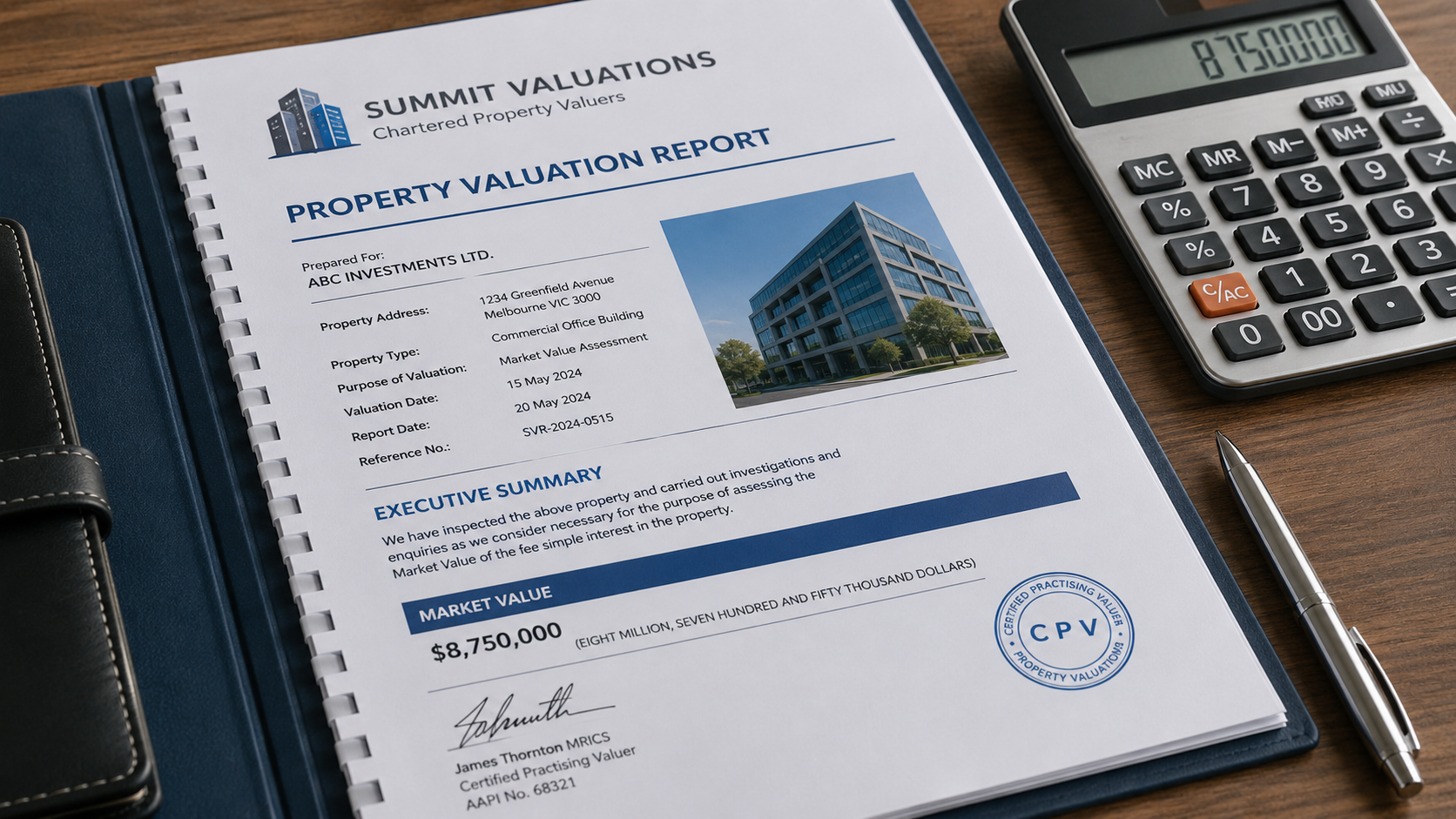
A valid property valuation report for visa purposes from RaoValuers will typically include:
- Details of the Valuer: Name, qualifications, registration number (e.g., IBBI registration), and contact information.
- Property Details: Full address, type of property (residential, commercial, land), area, legal description, and ownership documents.
- Valuation Methodology: A clear explanation of how the fair market value was determined (e.g., sales comparison approach, income approach).
- Date of Valuation: The valuation should be recent, typically within the last 3-6 months.
- Fair Market Value: The final assessed value of the property in Indian Rupees and often its equivalent in a major foreign currency (like USD or EUR) for international clarity.
- Photographs: Images of the property to support the assessment.
- Disclaimer/Assumptions: Any limitations or assumptions made during the valuation process.
Step-by-Step: Getting Your Property Valued for a Visa Application
The process of getting your property valued for a visa application with RaoValuers is designed to be straightforward and efficient, especially for NRIs.
1. Initial Consultation & Document Submission:
- Contact Us: Reach out to us via our website or WhatsApp for a free, no-obligation consultation. Explain that you need a property valuation for a visa application.
- Provide Property Details: Share basic information about your property (location, type, size) and the purpose of the valuation.
- Submit Documents: You will need to provide copies of your property ownership documents (sale deed, title deed, mutation records, property tax receipts, approved building plans if applicable). For NRIs, this can often be done digitally.
2. Valuation Process:
- Site Visit (if required): Our local expert valuer from our network of 40+ professionals will conduct a physical inspection of the property. This is crucial for assessing its condition, features, and market context. For NRIs, we coordinate with local contacts or family members for access.
- Market Research & Analysis: Our valuers conduct thorough market research, analyzing recent sales data of comparable properties in the area, local market trends, and other factors influencing value.
- Valuation Calculation: Using approved methodologies (like the sales comparison approach, income capitalization approach, or cost approach, depending on the property type), the fair market value is determined.
3. Report Preparation & Delivery:
- Drafting the Report: A comprehensive valuation report is prepared, incorporating all necessary details, methodology, findings, and the final valuation figure. This report adheres to international standards and IBBI guidelines.
- Quality Check: Every report undergoes a rigorous quality check by senior valuers to ensure accuracy, compliance, and clarity.
- Delivery: Your government-approved property valuation report is typically delivered within 48-72 hours via email (PDF) and, if requested, via courier. This quick turnaround is vital for meeting visa deadlines.
Throughout this process, our team is available to answer your questions and guide you, ensuring you understand each step. We have been providing these services since 1995, so we know what embassies expect.
Which Visa Types Commonly Require Property-Based Financial Proof
Property valuation can be a valuable asset for proving financial stability across a range of visa categories. While specific requirements vary by country and visa type, here are the common ones:
Study Visas (e.g., Canada SDS/non-SDS, UK, Australia)
Students often need to prove they have sufficient funds to cover tuition fees, living expenses, and travel. While liquid funds are primary, property can strengthen your application, especially for non-SDS (Student Direct Stream) categories in Canada or when demonstrating family financial capacity.
- Canada: For non-SDS applications, or if your liquid funds are slightly short, a property valuation can show your family's overall wealth. IRCC often looks for a clear financial plan.
- UK: The UK Home Office requires applicants to show sufficient funds. Property can be part of a broader financial picture, especially if parents are sponsoring the student and need to demonstrate their assets.
- Australia: The Department of Home Affairs assesses genuine temporary entrant (GTE) criteria, which includes financial capacity. Property ownership can demonstrate strong financial ties to India, supporting the GTE assessment.
Schengen/Tourist Visas
For short-stay visas to European countries (Schengen Area) or other tourist destinations, applicants must prove they have enough funds to cover their entire trip. While daily cash requirements are often specified, showing significant assets like property can reinforce your financial stability and intent to return. It tells the visa officer you have substantial reasons to come back to India.
Immigrant/PR Visas
For permanent residency or immigrant visas, particularly those requiring proof of settlement funds or demonstrating long-term financial stability, property valuation can be highly effective.
- Express Entry (Canada): While primary proof of funds for Express Entry is usually liquid (bank statements, investments), having substantial property can contribute to your overall financial profile, especially if you are asked for additional proof of assets.
- Business/Investor Visas: For visas that require significant investment or proof of substantial net worth, property is almost always a key component of the financial assessment.
- Family Sponsorship: If you are sponsoring family members, demonstrating your assets, including property, can be crucial to show your ability to support them.
In all these cases, the property valuation report serves as an official, third-party confirmation of your wealth, making your financial claims credible to visa authorities.
Property Valuation vs. Other Proof-of-Funds Documents, Comparison Table
It is helpful to see how a government-approved property valuation report stacks up against other common financial documents. Each has its strengths and weaknesses.
| Feature | Government-Approved Property Valuation Report | Bank Statements | Fixed Deposits (FDs) | Chartered Accountant Net-Worth Certificate | Income Tax Returns (ITR) |
|---|---|---|---|---|---|
| Acceptance by Embassies | High (for net worth/ties to home country, often supplementary) | Very High (primary proof of liquidity) | Very High (strong proof of secured funds) | Medium to High (often requires supporting documents like valuation reports) | Medium (shows income history, not current liquid assets) |
| Processing Time | 48-72 hours (for report from RaoValuers) | Instant (statement generation) | Instant (certificate generation) | 2-5 days (depending on CA) | Annual (filed once a year) |
| Cost | Moderate (professional service fee) | Free (bank service) | Free (bank service) | Moderate (CA professional fee) | Low (if self-filed) to Moderate (if filed by professional) |
| Liquidity Proof Strength | Low (property is illiquid, cannot be spent immediately) | Very High (shows readily available cash) | High (funds are locked but accessible, often with penalty) | Medium (summarizes assets, but liquidity depends on underlying assets) | Low (shows past earnings, not current cash in hand) |
| Common Rejection Reasons | Not from government-approved valuer, outdated report, insufficient detail. | Funds appear suddenly, large unexplained deposits, low balance. | Funds are pledged, short maturity period, unclear source of funds. | Lacks supporting documents, CA not recognized, unclear asset breakdown. | Inconsistent income, low income, not reflecting current financial position. |
Key takeaway: While property valuation is excellent for proving net worth and strong ties to your home country, it is generally not sufficient on its own to prove immediate liquidity. Most embassies prefer to see a combination of liquid assets (bank statements, FDs) along with substantial fixed assets like property. Property valuation strengthens your overall financial profile, showing a deeper level of financial stability beyond just cash.
> Work with Rao Valuers
>
Common Mistakes That Get Visa Applications Rejected
Even with valid property, applicants can make mistakes that lead to rejection. Avoid these pitfalls:
1. Using an Unqualified Valuer: This is the most common mistake. A report from a local real estate agent or an uncertified individual will not be accepted. Always use a government-approved, IBBI-registered valuer.
2. Outdated Valuation Report: Property values change. Most embassies require valuation reports to be recent, typically not older than 3-6 months. An old report will be considered invalid.
3. Incomplete Documentation: Failing to provide all necessary property documents to the valuer (like title deeds, mutation records) can lead to an incomplete or inaccurate report, which may be questioned by visa officers.
4. Misrepresenting Property Value: Attempting to inflate the property's value can lead to discrepancies that visa officers might flag. Always seek an honest, fair market valuation.
5. Relying Solely on Property: As discussed, property is illiquid. While it proves net worth, it rarely suffices as the sole proof of funds. Always combine it with proof of liquid assets (bank statements, fixed deposits) to show you can meet immediate expenses.
6. Lack of Clarity/Translation: If your property documents or valuation report are not clear, well-structured, or in English (or the language required by the embassy), they might be rejected. Ensure your valuer provides a professional, clear report.
7. Not Understanding the "Source of Funds" Requirement: For very large property values, some embassies might ask for proof of how the property was acquired. While less common for standard visa applications, it is something to be aware of.
RaoValuers ensures that our reports are comprehensive, current, and meet the stringent requirements of international embassies, minimizing the risk of rejection due to valuation issues.
How Long Does the Process Take and What Does It Cost
Understanding the timeline and expense is crucial for planning your visa application.
Process Duration:
With RaoValuers, the entire process from initial contact to receiving your final, government-approved property valuation report typically takes 48-72 hours. This fast turnaround is possible due to our efficient processes, experienced team of 40+ valuers across India, and streamlined communication, including WhatsApp for quick queries and document sharing. The actual site visit (if required) is coordinated promptly, and report generation follows swiftly.
Cost:
The cost of a professional property valuation report varies depending on several factors:
- Type of Property: Residential, commercial, industrial, or agricultural properties have different complexities.
- Location: Properties in major metropolitan areas might have different fee structures than those in remote locations.
- Size and Complexity: Larger or more complex properties (e.g., those with multiple structures, legal encumbrances) require more detailed analysis.
- Urgency: While we offer a standard fast turnaround, any exceptionally urgent requests might involve specific considerations.
We provide a free, no-obligation quote after understanding your specific needs. This allows you to know the exact cost upfront without any hidden charges. Our pricing is transparent and competitive, reflecting the expertise and official recognition of our valuers. Investing in a professional, government-approved valuation report is a small but critical cost to ensure your visa application is robust and accepted.
Frequently Asked Questions (FAQs)
Here are some common questions we receive from visa applicants regarding property valuation:
Can I use my parents' or spouse's property for my visa application?
Yes, generally you can, but it requires clear documentation. If the property is not in your name, you will need to provide proof of your relationship (birth certificate, marriage certificate) and a notarized affidavit from the property owner stating their relationship to you and confirming that they are supporting your application and that the property can be considered as part of your financial proof. The valuation report itself will still be for the property, but the accompanying documents explain the connection.
Does a self-declared valuation work, or must it be government-approved?
A self-declared valuation will not work. Visa authorities strictly require a government-approved property valuation report prepared by a certified and registered valuer. This ensures objectivity, accuracy, and compliance with legal standards. Reports from uncertified sources will be rejected.
How long is a property valuation report valid for visa purposes?
Most embassies prefer a recent valuation report, typically not older than 3 to 6 months from the date of your visa application submission. Property values can change, so older reports may not accurately reflect current market conditions and could be rejected.
Will a visa officer accept property value alone without bank statements?
In most cases, no. While property proves significant net worth and strong ties to your home country, it is an illiquid asset. Visa officers usually require proof of liquid funds (bank statements, fixed deposits) to ensure you can cover immediate expenses like travel, accommodation, and daily living costs. Property valuation acts as a strong supplementary document, enhancing your overall financial profile rather than replacing liquid asset proof.
Can NRIs get their India property valued remotely for a visa application?
Yes, absolutely. RaoValuers specializes in assisting NRIs. You can initiate the process online or via WhatsApp, provide documents digitally, and our local team in India will coordinate the site visit (if needed) with your family or designated contact. The final government-approved report can be delivered to you electronically anywhere in the world. We understand time zone differences and work to make the process smooth for you.
What happens if my property valuation is lower than my visa's required funds threshold?
If your property valuation, even combined with your liquid assets, falls short of the required threshold, your visa application might be at risk. In such cases, you would need to explore other ways to demonstrate additional funds, such as securing more liquid assets, showing sponsorship from eligible family members (with their own proof of funds), or reconsidering your travel plans if the financial requirement cannot be met. A property valuation report simply states the fair market value, it does not guarantee your application's success if the numbers do not meet the embassy's minimums.
Get Your Government-Approved Property Valuation Report Today
Navigating visa financial requirements can be complex, but using your property as proof of assets does not have to be. With RaoValuers, you get the assurance of a government-approved, IBBI-registered valuation from a company with 35 years of experience and ISO 9001 certification. Our 40+ expert valuers deliver precise, accepted reports in just 48-72 hours, helping you meet your visa deadlines with confidence.
Ready to strengthen your visa application with a professional property valuation? Get a free, no-obligation valuation quote today. Our team is ready to assist you via WhatsApp for a quick consultation.
Request Your Free Valuation Quote Now
Checked by Parish Rao, Chartered Engineer and Government Approved Valuer.
Page last checked on 3 September 2026.
Get a free valuation quote
Tell us what you need valued. We will message you on WhatsApp with which report you need and what it costs, free of charge.
In a hurry? Call +91 98681 69747 instead.