
How Property Value is Determined in Court Cases 2026
TL;DR ANSWER BLOCK Property value in an Indian legal dispute or court case is determined by a court-appointed or IBBI-registered valuer, and the method depends on the property and dispute.
TL;DR ANSWER BLOCK
Property value in an Indian legal dispute or court case is determined by a court-appointed or IBBI-registered valuer, and the method depends on the property and dispute. Courts rely on these expert valuation reports, prepared by government-approved valuers, to ensure fair and accurate financial settlements or divisions based on objective market assessments.
When you are involved in a legal dispute in India that concerns property, one of the most critical questions you will face is: "How is the property's value actually determined?" This is not a simple question, and getting it wrong can change the outcome of your case, whatever type of dispute you're dealing with. As government-approved and IBBI-registered valuers operating since 1995, we at Rao Valuers understand the specific requirements of the Indian legal system.
What Does "Legal Valuation" Mean in a Court Case?
A legal valuation, specifically for a court case, is an independent, objective assessment of a property's monetary worth, prepared by a qualified expert according to specific legal and professional standards. Its primary purpose is to provide the court with an unbiased financial basis for making decisions, ensuring equity and fairness among all parties involved. It is not just an estimate; it is a meticulously prepared document designed to withstand legal scrutiny.
Difference between a market valuation and a court/legal valuation
While both market valuations and legal valuations aim to determine a property's worth, their context, purpose, and the level of detail required differ significantly. A general market valuation might be done for a private sale or purchase, focusing on current market trends and a quick estimate. A court valuation, however, is far more rigorous. It requires a deeper analysis, adherence to specific legal frameworks, and a report format that can be presented as evidence. The valuer must be prepared to defend their methodology and findings under cross-examination, making the process much more formal and detailed.
Who Determines Property Value in Indian Court Disputes?
In India, the determination of property value in legal disputes primarily falls to qualified valuers. Their expertise is crucial for the court to arrive at a just decision.
Role of court-appointed valuers vs party-appointed valuers
Courts often have the power to appoint their own independent valuers, especially in complex cases or when there is significant disagreement between parties. This is often done under provisions like Order XXVI of the Code of Civil Procedure, 1908, which allows courts to issue commissions for local investigations, including property valuations. A court-appointed valuer is seen as an impartial expert, whose report carries significant weight.
However, parties to a dispute can also appoint their own valuers. While these "party-appointed" reports are often submitted as evidence, their weight in court might be less than a court-appointed one, especially if there are conflicting reports. The court may then opt for a third, neutral valuer, or carefully scrutinize both reports. In our experience, having a report from a highly credible, government-approved valuer from the outset can often streamline the process, even if initially party-appointed.
Why IBBI registration and government approval matter to courts
For a valuation report to be credible and legally defensible in Indian courts, the valuer's credentials are paramount. The Insolvency and Bankruptcy Board of India (IBBI) plays a crucial role here. The Companies (Registered Valuers and Valuation) Rules, 2017, framework governs registered valuers in India. Courts, tribunals, and various government bodies increasingly prefer or mandate valuations from IBBI-registered valuers. This registration signifies that the valuer has met stringent educational, experience, and ethical standards.
Government approval, like that held by Rao Valuers, further reinforces the valuer's credibility and adherence to official standards. It assures the court that the valuation is conducted by an expert recognized by the state, minimizing the chances of bias or error. When you are looking for a valuer for a court case, always confirm their IBBI registration and government approval.
The Valuation Methods Courts Recognize
Courts expect valuations to be based on established and transparent methodologies. There are three primary approaches widely accepted in India and internationally, often guided by standards like those from the Royal Institution of Chartered Surveyors (RICS).
Comparable Sales (Market) Method
This is perhaps the most common and easily understood method. It involves comparing the subject property with similar properties that have recently been sold in the same or similar locality. Adjustments are made for differences in size, age, condition, location, amenities, and other features. This method works best when there is an active market with sufficient recent transaction data.
Income Capitalization Method
This method is typically used for income-generating properties, such as rental apartments, commercial buildings, or leased land. It estimates the property's value based on the income it is expected to generate over its economic life. The projected net operating income is capitalized (divided) by a suitable capitalization rate (which reflects the risk and return expectations) to arrive at the present value of the property.
Cost/Depreciated Replacement Method
This approach estimates the cost to replace the property's improvements (buildings, structures) with a new one of similar utility, less depreciation for age, wear and tear, and obsolescence. The value of the land is then added to this depreciated replacement cost. This method is often used for specialized properties where comparable sales are scarce, or for insurance purposes, and can be relevant in cases involving damaged property or specific construction costs.
Which method applies to which dispute type (partition, divorce, probate, land acquisition)
The choice of method depends on the property type and the nature of the dispute:
- Partition Suits & Divorce Settlements: Often involve residential or commercial properties. The Comparable Sales Method is frequently used, especially for residential properties. For commercial assets, the Income Capitalization Method might also be applied.
- Probate/Inheritance Disputes: Similar to partition suits, involving various property types. The choice of method depends on the specific asset.
- Land Acquisition/Eminent Domain Compensation: Here, the focus is on fair market value. The Comparable Sales Method is primary, but if direct comparables are unavailable, the Income Capitalization Method (for income-generating land) or Cost Method (for developed land) might be used. Specific legal provisions, such as those under the Right to Fair Compensation and Transparency in Land Acquisition, Rehabilitation and Resettlement Act, 2013, also guide the valuation.
- Loan Default Cases (SARFAESI): Banks typically require a market value, making the Comparable Sales Method most relevant.
Step-by-Step: How a Legal Valuation Report Is Prepared
Preparing a legally defensible valuation report is a systematic process that demands precision and adherence to standards.
Site inspection and documentation
The first critical step is a thorough physical inspection of the property. This involves looking closely at its condition, size, features, construction quality, and location. Simultaneously, the valuer collects and verifies the relevant property documents, from title deeds to tax receipts to building plans. This documentation forms the factual basis of the valuation.
Valuation date determination (critical in disputes, e.g., date of death, date of filing, date of separation)
A crucial aspect of legal valuations is establishing the "date of valuation." This is often not the date of inspection, but a specific date relevant to the legal dispute. For example:
- Divorce/Separation: The date of separation or filing of the divorce petition.
- Inheritance/Probate: The date of the deceased's passing.
- Partition Suits: The date the suit was filed, or a date mutually agreed upon by parties.
- Land Acquisition: The date of the preliminary notification under the relevant Act.
This specific date ensures that the valuation reflects the market conditions and property status as of that critical legal juncture.
Report format courts expect
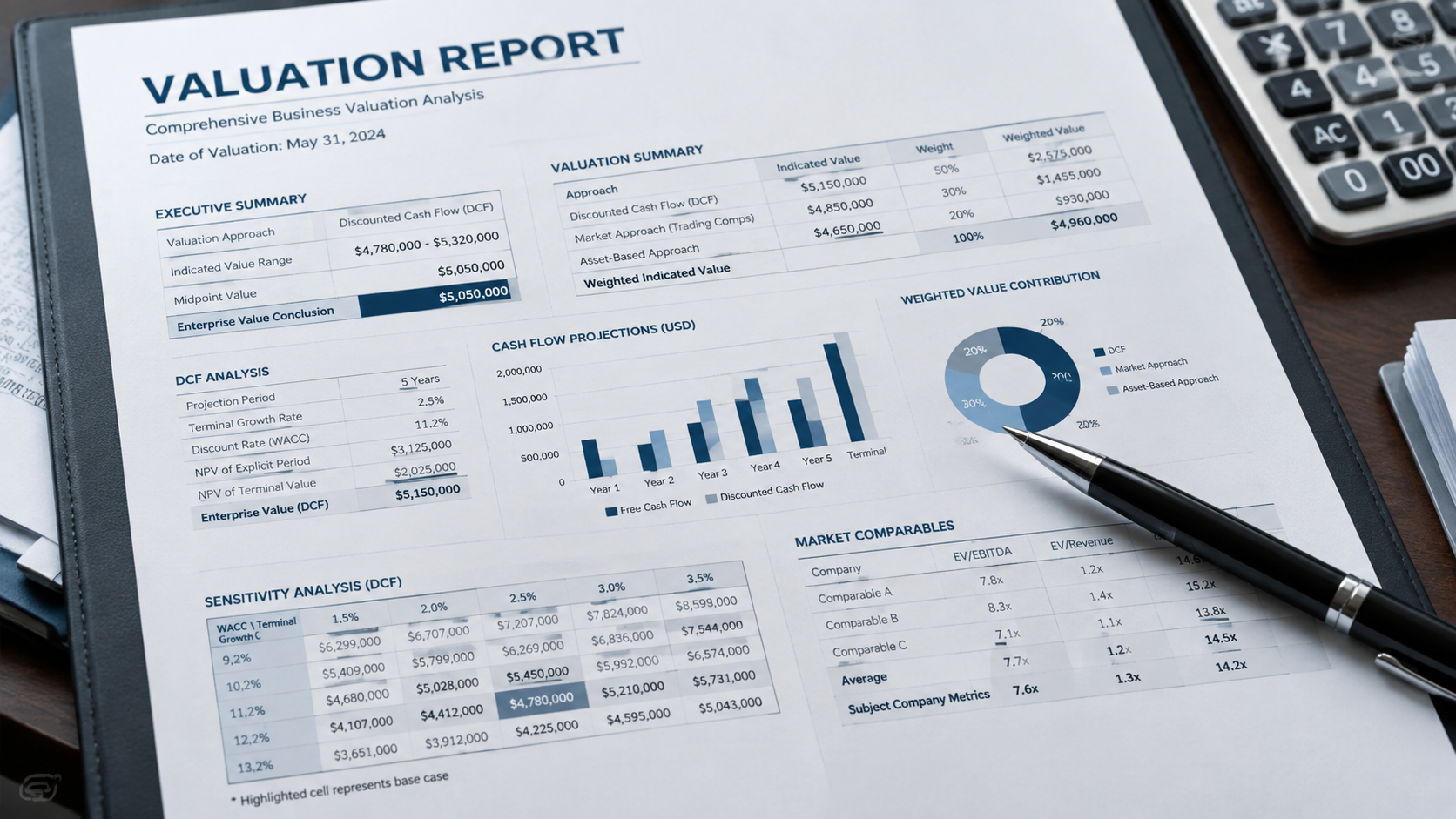
A court-ready valuation report is comprehensive and structured. It includes:
- Executive Summary: A brief overview of findings.
- Purpose of Valuation: Clearly stating it is for a legal dispute.
- Date of Valuation: The specific effective date.
- Property Description: Detailed information about the asset.
- Legal Documents Reviewed: A list of all documents examined.
- Valuation Methodology: A clear explanation of the approach(es) used.
- Market Analysis: Data supporting the comparable sales or income projections.
- Valuation Calculation: Step-by-step calculations.
- Conclusion: The final determined value.
- Limiting Conditions and Assumptions: Any factors that might impact the valuation.
- Valuer's Credentials: Proof of IBBI registration and government approval.
Common Types of Legal Disputes Needing Valuation
Property valuation is a cornerstone in many types of legal proceedings.
- Partition Suits: When co-owners of a property cannot agree on its division, a court may order a valuation to facilitate an equitable distribution or sale.
- Divorce/Matrimonial Property Division: In divorce proceedings, property acquired during the marriage needs to be valued for fair division between spouses.
- Probate/Inheritance Disputes: For the distribution of assets among heirs, or for estate duty purposes, properties within an estate require valuation.
- Land Acquisition/Eminent Domain Compensation: When the government acquires private land for public purposes, a valuation determines the fair compensation payable to the landowners.
- Loan Default/SARFAESI Cases: Banks and financial institutions require property valuations when recovering defaulted loans, particularly under the SARFAESI Act, 2002, to determine the reserve price for auction.
- Insurance Claim Disputes: In cases of property damage, a valuation might be needed to assess the extent of loss and determine the appropriate claim amount.
Court Valuation vs Other Valuation Types, COMPARISON TABLE
Understanding the differences between various valuation types helps clarify why a specific "court valuation" is necessary.
| Valuation Type | Purpose | Typical Turnaround | Who Accepts It | Method Used |
|---|---|---|---|---|
| Court/Legal Valuation | Fair and equitable financial basis for legal disputes (partition, divorce, probate, land acquisition). | 48-72 hours | Courts, Tribunals, Legal Counsel, IBBI | Comparable Sales, Income Capitalization, Cost Method (selected based on property/dispute) |
| Bank/Loan Valuation | To assess collateral value for securing loans. | 3-7 days | Banks, NBFCs (Non-Banking Financial Companies) | Primarily Comparable Sales, sometimes Income Capitalization for commercial properties. |
| Capital Gains (Income Tax) Valuation | To calculate capital gains tax on property sale/transfer. | 2-5 days | Income Tax Department | Cost of Acquisition (indexed), Fair Market Value as per specific tax rules. |
| Visa/Immigration Valuation | To demonstrate financial stability for visa applications. | 2-3 days | Embassies, Immigration Authorities | Comparable Sales (to prove ownership and value of assets). |
| Insurance Valuation | To determine sum insured or assess loss in case of damage. | 3-5 days | Insurance Companies | Depreciated Replacement Cost, Reinstatement Value. |
What Makes a Valuation Report Legally Defensible in Court
A valuation report is only useful in court if it can stand up to scrutiny. Several factors contribute to its legal defensibility.
Registered valuer credentials
As discussed, the valuer's credentials are non-negotiable. An IBBI-registered and government-approved valuer brings an inherent level of trust and authority to the report. Their qualifications confirm their expertise and adherence to professional standards, making their testimony and report harder to challenge effectively. We have been government-approved property valuers since 1995, delivering reports that stand up in court.
Documentation and site visit proof
Every claim in the report must be backed by evidence. This means site photographs, verified property documents, and market data references all need to be on record. Any omission or inaccuracy in documentation can weaken the report's credibility.
Cross-examination readiness
A legally defensible report is one where the valuer is prepared to explain and defend every aspect of their methodology, data, and conclusions under cross-examination. This takes real command of valuation principles and the property's specifics, not just familiarity with a template. Our 40+ expert valuers are experienced in preparing reports that anticipate potential challenges and are ready for such scrutiny.
How Long Does a Legal Valuation Take and What Does It Cost
The timeline for a legal valuation can vary depending on the complexity of the property and the availability of documents. However, at Rao Valuers, we understand the urgency often associated with court matters. We are committed to delivering court valuation reports within 48-72 hours of receiving all necessary documents and completing the site inspection.
The cost of a legal valuation depends on factors like the property type, its location, size, and the complexity of the valuation required. It is an investment in ensuring a fair legal outcome. We offer a WhatsApp-based free consultation to discuss your specific needs and provide a clear quote.
Common Mistakes That Weaken a Valuation Report in Court
Several pitfalls can undermine a valuation report's effectiveness in court:
- Lack of Independence: If the valuer appears biased towards one party.
- Outdated Information: Using old comparable sales data or an incorrect valuation date.
- Insufficient Documentation: Failure to collect and verify all relevant property documents.
- Unclear Methodology: Not explaining the valuation approach in an understandable manner.
- Inadequate Site Inspection: Missing critical details about the property's condition or features.
- Lack of Credentials: Reports from unqualified or unregistered valuers are often dismissed.
FAQ
Can a court accept a private valuer's report, or does it have to appoint its own?
Yes, a court can accept a private valuer's report, especially if the valuer is IBBI-registered and government-approved. However, courts also have the power to appoint their own valuer for impartiality, or if party-appointed reports conflict.
**What date
Checked by Parish Rao, Chartered Engineer and Government Approved Valuer.
Page last checked on 4 September 2026.
Get a free valuation quote
Tell us what you need valued. We will message you on WhatsApp with which report you need and what it costs, free of charge.
In a hurry? Call +91 98681 69747 instead.