
Inherited Property Valuation in India: Your 2026 Guide
Inheriting property in India requires a formal valuation report. This report is essential for calculating capital gains tax, ensuring fair family division, and meeting legal requirements.
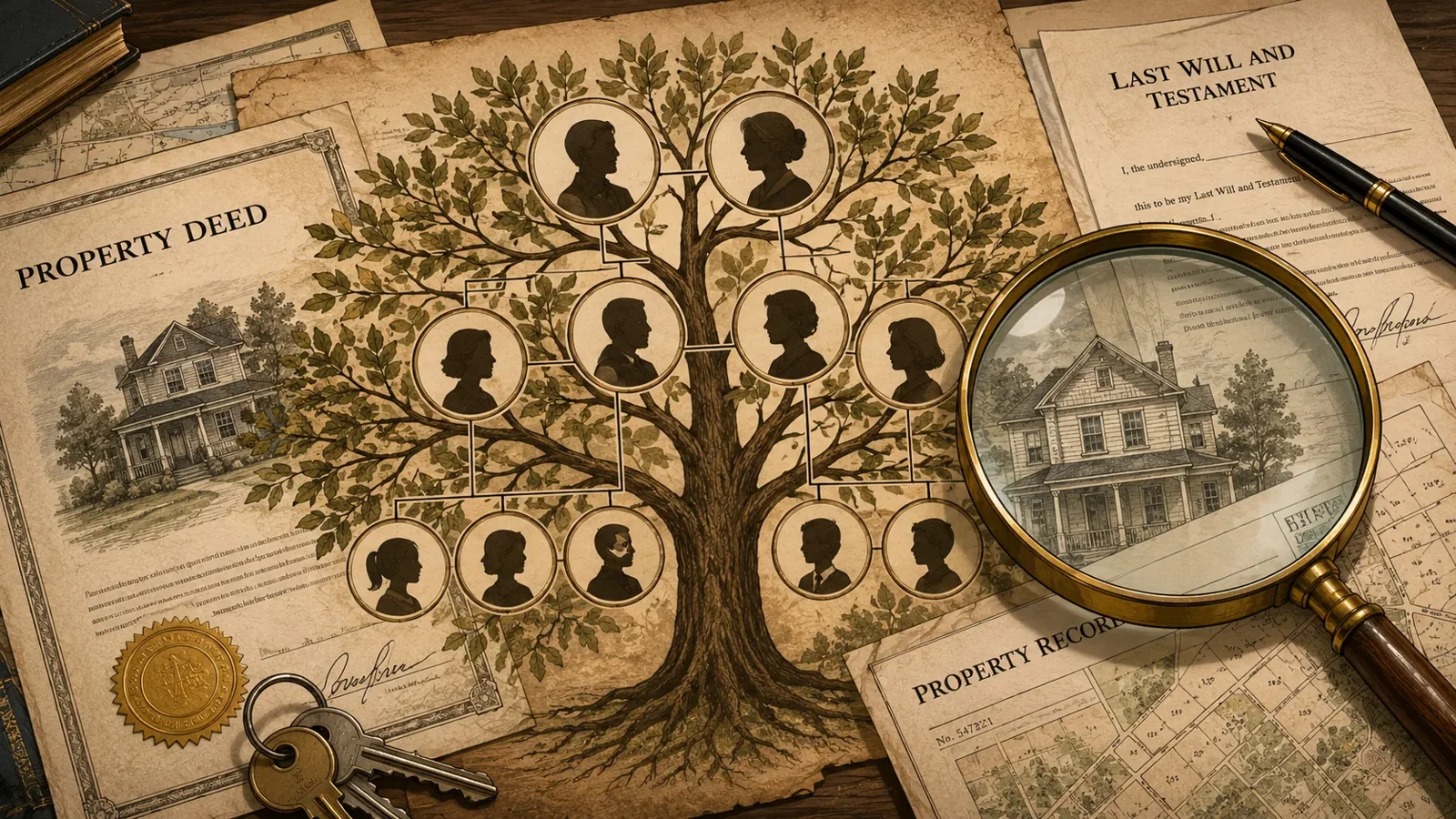
Inheriting property in India requires a formal valuation report. This report is essential for calculating capital gains tax, ensuring fair family division, and meeting legal requirements.
Why do I need a professional valuation for an inherited property?
A formal valuation is a crucial step for legal and financial clarity. A government-approved valuation report is essential for calculating capital gains tax upon any future sale of the property. This ensures compliance with tax laws and helps avoid penalties. If the property needs to be divided among heirs, a transparent valuation provides an unbiased basis for a fair family settlement. A valuation is often required for legal processes like obtaining a probate or succession certificate, which formally establish your right to the inherited asset. The valuation establishes a clear "Cost of Acquisition" for your financial records. This prevents future tax disputes and helps in accurate financial planning. The Income Tax Act references capital gains on inherited assets, making a proper valuation indispensable. Section 49(1) of the Income Tax Act, 1961, addresses the cost of acquisition for inherited assets. The Central Board of Direct Taxes (CBDT) also issues circulars and notifications regarding valuation methods.
What is the difference between market value today and the value for tax purposes?
When valuing inherited property, two dates are critical: the date of inheritance and April 1, 2001. For tax calculations, Indian law allows you to use the Fair Market Value (FMV) as of April 1, 2001, as your cost basis if the property was originally acquired by the deceased owner before that date. This can significantly reduce your future capital gains tax liability when you sell the property. For example, if a property was bought in 1990 for ₹1 Lakh and its FMV in 2001 was ₹10 Lakhs, you can use the ₹10 Lakhs figure (plus further adjustments using the Cost Inflation Index) to calculate your gains, not the original ₹1 Lakh. This "indexed cost of acquisition" is a legal way to save a substantial amount on taxes.
Rao Valuers specializes in determining this historical FMV as of April 1, 2001. This is a complex task that requires deep market knowledge and access to historical data. Rao Valuers uses methodologies such as the Sales Comparison Approach, analyzing historical property transactions and government records from that period. Rao Valuers' reports clearly state the value on both relevant dates to serve all your needs, today and for tax purposes.
Case Study: Rao Valuers valued a residential property in Delhi, inherited by a client whose parents purchased it in 1985. The original purchase price was ₹5 Lakhs. Rao Valuers' valuation established the Fair Market Value as of April 1, 2001, at ₹45 Lakhs. When the client sold the property in 2023 for ₹2 Crores, using the 2001 FMV as the cost basis, after applying the Cost Inflation Index (CII), their capital gains tax liability was reduced by approximately ₹15 Lakhs compared to using the original purchase price.
What is Rao Valuers' process for valuing my inherited property?
Rao Valuers' process is designed to be straightforward and stress-free.
1. Initial Consultation & Document Request: Rao Valuers starts by understanding your specific needs, whether for tax, family settlement, or other purposes. Rao Valuers then provides a clear list of required documents, such as the title deed, the death certificate of the original owner, and any will or succession certificate.
2. Property Inspection & Data Collection: A certified valuer from Rao Valuers' pan-India network conducts a thorough physical or virtual inspection of the property. They gather detailed data on its location, size, condition, and current local market trends.
3. Market Analysis & Historical Research: Rao Valuers performs a detailed analysis, including researching historical market data for the April 1, 2001, valuation if applicable. This ensures accuracy, especially for older properties. Rao Valuers utilizes proprietary databases and publicly available government land records for historical price trends.
4. Report Preparation & Delivery: You receive a comprehensive, government-approved valuation report. This report is clear, detailed, and ready for submission to tax authorities, lawyers, or family members.
Why should I choose Rao Valuers for this important task?
Choosing the right valuer for an inherited property is critical. Rao Valuers' reports are prepared by valuers registered under the Wealth Tax Act, 1957 (Section 34AB). This means Rao Valuers' reports are accepted by all government bodies, including the Income Tax Department, ensuring your report is never rejected. Rao Valuers' valuers are also registered with the Insolvency and Bankruptcy Board of India (IBBI), registration number IBBI/RV/02/2019/10843, which further reinforces the credibility and legal standing of their reports.
With 35 years of experience and a network of 40+ expert valuers, Rao Valuers covers properties across India. Rao Valuers' local experts understand the specific market nuances of your property's location. Rao Valuers understands this is a sensitive time. Rao Valuers guides you through the process with sensitivity and explains everything in simple terms, making a complex task easier for you. Rao Valuers' expertise in 2001 FMV valuation for that inherited property is key to legally minimizing your future capital gains tax burden, potentially saving you a significant amount. Rao Valuers' reports go through banks, tax offices, and courts without coming back with questions.
What questions do people have about inherited property valuation?
[rv_faq]
What documents do I need for the valuation?
Typically, Rao Valuers will need the title deed, the death certificate of the original owner, and any legal documents like a will or succession certificate. Rao Valuers provides a checklist to guide you.
How long does the valuation process take?
After the property inspection, you can expect to receive your comprehensive report within 48 to 72 hours.
Is a physical visit to the property always necessary?
A physical visit is highly recommended for the most accurate assessment. However, Rao Valuers has protocols for remote or virtual valuation where a physical visit is not feasible.
My property is very old. Can you still value it as of 2026?
Yes, this is Rao Valuers' core expertise. Rao Valuers uses established methodologies and historical data to accurately determine the Fair Market Value as of April 1, 2001, even for very old properties.
Can I get a valuation for agricultural land?
Yes, Rao Valuers provides valuations for all types of inherited property, including agricultural land.
What if the original purchase deed is not available for the 2026 valuation?
Rao Valuers can still establish the 2001 FMV even without the original purchase deed, using their expertise and historical data. Rao Valuers often deals with situations where no purchase deed is available for the 2001 value.
[/rv_faq]
How do I get started with my valuation?
Take the first step towards financial clarity and peace of mind with your inherited property. Rao Valuers' team is ready to provide a free, no-obligation consultation.
Get a free valuation quote: (@L5)
Checked by Parish Rao, Chartered Engineer and Government Approved Valuer (Registration number CAT-I/443/117/2000-01).
Page last checked on 8 November 2026.
Get a free valuation quote
Tell us what you need valued. We will message you on WhatsApp with which report you need and what it costs, free of charge.
In a hurry? Call +91 98681 69747 instead.