
Valuer Charges in India: A Complete 2026 Cost Guide
Property valuation is a critical step for many financial and legal processes in India, such as selling a property, securing a bank loan, or applying for a visa. Individuals and entities often ask, "How much will this cost?" This is a fair question, and one we aim to answer clearly and directly.
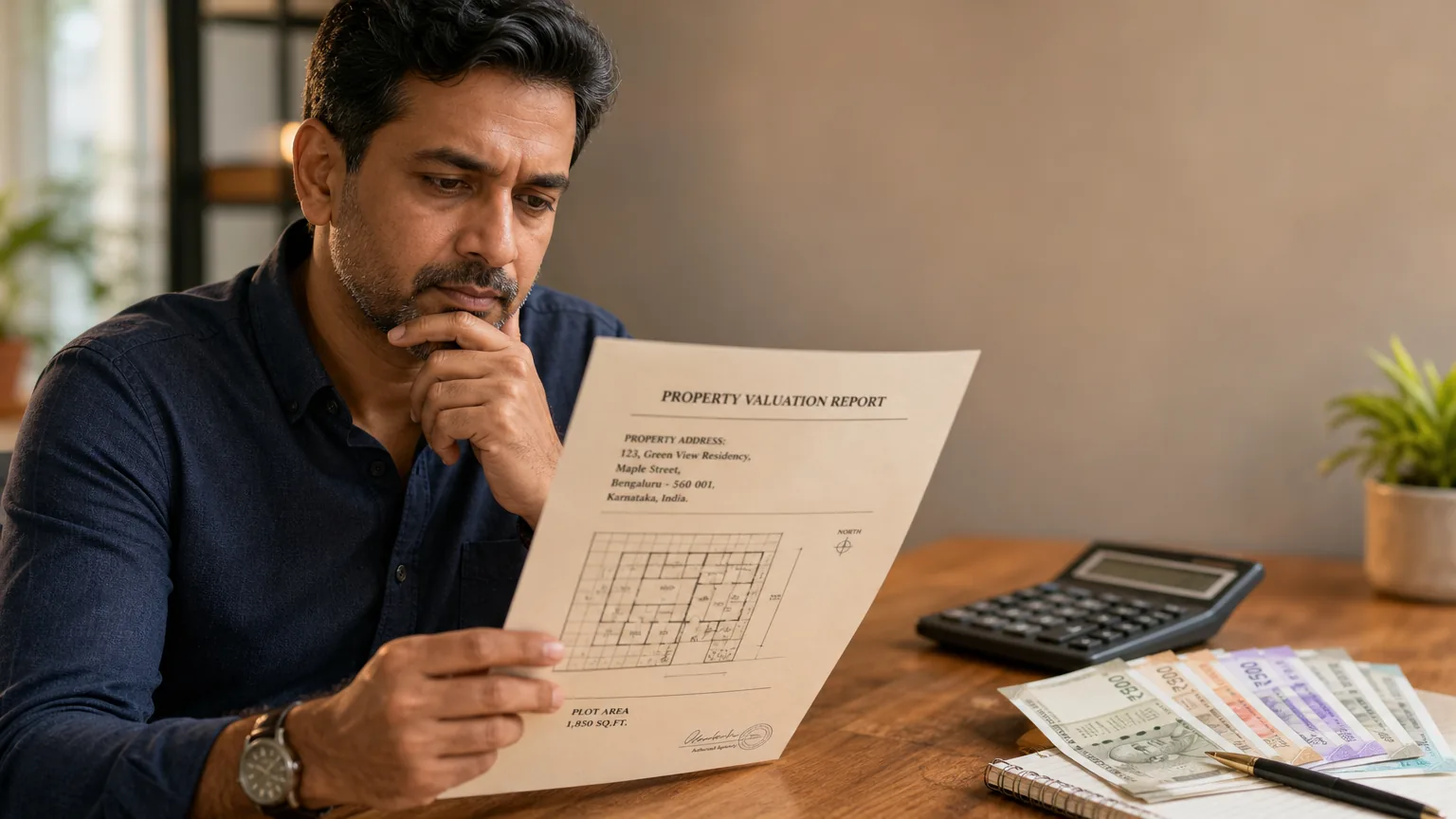
Property valuation is a critical step for many financial and legal processes in India, such as selling a property, securing a bank loan, or applying for a visa. Individuals and entities often ask, "How much will this cost?" This is a fair question, and one we aim to answer clearly and directly. With 35 years of experience, we have seen how a proper valuation report can prevent costly errors and ensure smooth transactions.
In India, government-approved valuer charges typically range from 0.1% to 0.5% of the property's market value, with a minimum fee often starting from ₹5,000 to ₹15,000. The final cost depends on the property type (residential, commercial, agricultural), its location, the complexity of the valuation, and the purpose of the report, which could be for capital gains, a bank loan, or a visa application.
Need an accurate, government-approved valuation report? Get a free, no-obligation quote from our experts on WhatsApp. We reply within minutes.
Typical valuer charges in India
When you need an official valuation report in India, the fees you pay to a government-approved valuer are usually calculated in one of two ways: a percentage of the property's market value or a minimum fixed fee.
For most properties, particularly those with a higher market value, valuers will charge a percentage of the property's assessed value. This percentage typically falls between 0.1% and 0.5%. For example, if your property is valued at ₹1 Crore, a 0.2% fee would be ₹20,000. This percentage-based model ensures that the fee is proportionate to the asset being valued.
However, for properties with lower market values, or for simpler valuation tasks, a minimum fee structure often applies. This minimum fee can range from ₹5,000 to ₹15,000, depending on the valuer and the basic complexity involved. This minimum ensures the valuer is compensated for their time and the administrative effort involved, regardless of the property's final value.
It is important to remember that these are general ranges. The specific charge will always be influenced by several key factors, which we will explain in detail below.
Key factors that influence property valuation fees
Many elements go into determining the final cost of a property valuation report. Understanding these can help you anticipate the charges and appreciate the work involved.
Property type and size
The nature and dimensions of the property significantly impact the valuation fee. Valuing a simple 2BHK flat in a residential complex is generally less complex than valuing a sprawling commercial building with multiple tenants or a large parcel of agricultural land. Each property type requires different valuation methodologies and market research.
For instance, a residential property might be valued based on comparable sales, while a commercial property often requires an income capitalization approach, which is more intricate. Agricultural land valuations consider factors like soil quality, irrigation, crop yield potential, and local government regulations, adding layers of complexity. Larger properties, regardless of type, also demand more time for physical inspection and data collection, which naturally affects the fee.
Property location (urban vs. rural)
The geographical location of your property plays a crucial role in determining valuation costs. Properties in major metropolitan cities like Mumbai or Delhi often command higher valuation fees compared to those in smaller towns or rural areas.
This difference is due to several reasons. Urban markets are typically more dynamic and require more extensive research. Additionally, valuers in prime urban areas might have higher operational costs. While our team of 40+ expert valuers covers India, reaching remote rural locations can sometimes involve additional travel time and expenses, which may be factored into the fee.
Purpose of the valuation report
The reason you need the valuation report is one of the most significant factors in determining its cost. Different purposes demand different levels of detail and compliance requirements.
At Rao Valuers, we provide reports for a range of purposes, each with its own specific considerations:
- Capital Gains Tax: If you are selling a property, especially one held for many years, you need an accurate valuation for calculating capital gains tax. This often involves determining the Fair Market Value (FMV) as of April 1, 2001, for indexation benefits. This specific calculation requires historical data research and expert judgment, which can add to the complexity and therefore the cost. An accurate report here can significantly reduce your tax liability. You can learn more about how we help with capital gains tax valuation.
- Bank Loans or Mortgages: Banks require an independent valuation to assess the collateral value of a property before sanctioning a loan. These reports must adhere to strict banking guidelines and are crucial for your loan approval.
- Visa or Immigration: Many countries require a property valuation report as proof of assets for visa applications. These reports need to be comprehensive and accepted by embassies, like the reports we provide.
- Court Matters: Valuations for court disputes, family partitions, or divorce settlements often involve legal complexities, potentially requiring expert testimony or specific formatting for judicial acceptance.
- Income Tax Return (Schedule AL): For high-net-worth individuals, Schedule AL of the Income Tax Return requires reporting assets, including property, at their fair market value. This demands a precise and compliant valuation.
Each of these purposes has unique requirements, influencing the valuer's scope of work and, consequently, the fee.
Complexity and required research
Not all properties are straightforward to value. Several factors can increase the complexity of a valuation, leading to higher fees:
- Incomplete or Disputed Documentation: If property documents are missing, unclear, or if there is a title dispute, the valuer will need to spend more time on due diligence and risk assessment.
- Unique Property Features: Valuing properties with unusual architectural designs, historical significance, or specific environmental considerations can be more complex.
- Valuing properties purchased before April 2001 for FMV calculation: As mentioned for capital gains, determining the Fair Market Value from over two decades ago requires specialized knowledge and access to historical market data, which adds to the research effort.
- Non-Standard Properties: Properties like factories, hotels, or specialized industrial units require expertise in their specific sector, which can increase the fee.
Urgency of the report
While we at Rao Valuers pride ourselves on delivering reports quickly, typically within 48 to 72 hours, an extremely urgent request outside our standard turnaround might sometimes incur an additional expedited service charge. However, our standard service is already designed for speed, ensuring you get your report promptly without unnecessary delays.

Valuer charges comparison: Who to hire
When looking for a property valuer, you will encounter various options, each with different fee structures and levels of acceptance. It is critical to understand who you are hiring, especially for official purposes. Always choose a government-approved valuer to ensure your report is accepted by the necessary authorities.
Here is a comparison of different types of valuers you might encounter:
| Valuer Type | Typical Charges | Report Acceptance | Key Considerations |
|---|---|---|---|
| IBBI Registered & Govt. Approved Valuer | 0.1% - 0.5% of property value (with min. fee) | High (Accepted by Tax Dept., Banks, Courts, Embassies) | Legally required for official purposes like capital gains, visa, and IBBI matters. Ensures accuracy and compliance. |
| Local/Unregistered Valuer | Often lower, fixed fee | Low (Frequently rejected by official bodies) | High risk of rejection, leading to delays and financial loss. Not suitable for any legal or financial compliance. |
| Bank Panel Valuer | Fees often set by the bank | Accepted only by that specific bank for a loan | Cannot be used for other purposes like capital gains tax or visa applications. You have no choice in who the valuer is. |
| Online Valuation Tools | Free or very low cost | None (Not a legal document) | Provides a rough estimate only. Cannot be submitted to any official authority. Useful for initial research, not for compliance. |
At Rao Valuers, we are Government approved, IBBI registered (Reg. No. IBBI/RV/02/2019/10843), and ISO 9001 certified, with our original registration CAT-I/443/117/2000-01. This ensures our reports meet the highest standards and are accepted by all major banks, the Income Tax Department, courts, and embassies across India.
What is included in a valuer's fee?
When you pay for a professional property valuation from a firm like Rao Valuers, you are paying for a comprehensive service that goes far beyond just a number. Our fees cover:
- Site inspection and physical verification: A thorough visit to the property to assess its condition, features, and surroundings.
- Scrutiny of legal documents (title deed, sale agreement, etc.): Careful review of all relevant legal paperwork to confirm ownership, identify encumbrances, and ensure compliance.
- Research on local property market trends and comparable sales: In-depth analysis of recent transactions, market dynamics, and economic indicators to arrive at a realistic market value.
- Calculation of the property's Fair Market Value (FMV): Applying appropriate valuation methodologies, including, if necessary, determining the FMV as of April 1, 2001, for capital gains purposes.
- Preparation of the detailed, signed, and stamped valuation report: The creation of an official, legally compliant document that presents the valuation findings clearly and concisely.
- Post-report support for queries from authorities: We stand by our reports and are available to address any questions from banks, the Income Tax Department, or other official bodies.
> Work with Rao Valuers
>
> Get a free valuation quote →
An important note on "cheap" valuation services
It is tempting to opt for the lowest-cost valuation service, especially when the fee seems significant. However, we cannot stress enough the importance of choosing a reputable, government-approved valuer. An inaccurate, non-compliant, or unapproved valuation report can lead to severe consequences.
Imagine submitting a report for your capital gains tax that is later rejected by the Income Tax Department. This could result in income tax scrutiny and penalties. Similarly, a visa application could be rejected or a bank loan denied because the valuation report did not meet the required standards. These issues can cost you far more in delays, legal fees, and financial losses than the initial savings on a "cheap" report.
With 35 years of valuation excellence, Rao Valuers provides reports that go through banks, tax offices, and courts without coming back with questions. We prioritize accuracy, compliance, and your peace of mind.
Frequently asked questions about valuer charges
How are valuer fees calculated for capital gains tax?
For capital gains, the valuer's fee is typically based on the property's Fair Market Value. The process often involves determining the FMV as of April 1, 2001, if the property was acquired before then, which can add complexity. The fee remains a small percentage of the property value, ensuring the cost is proportionate to the asset's worth.
Do I have to pay the valuer fees upfront?
Most professional valuers, including our team at Rao Valuers, require a portion of the fee to be paid upfront to initiate the process, which includes the site visit and document review. The balance is typically due upon delivery of the final valuation report.
Are valuer charges negotiable?
While there may be some flexibility depending on the scope of work, fees are generally standardized based on factors like property value and type. Reputable firms focus on providing accurate, compliant reports at a fair price rather than competing on the lowest cost, which could compromise quality.
Can I get a free property valuation report?
You can get a free estimate from online tools, but this is not a legal valuation report. For any official purpose like taxes, loans, or visas, you need a signed report from a government-approved valuer. At Rao Valuers, we offer a free, no-obligation quote for our official valuation services so you know the exact cost before you begin.
Is the GST applicable on property valuation charges?
Yes, property valuation is a professional service, and GST is applicable on the fees charged by the valuer. The current standard GST rate will be added to the final invoice.
Why are IBBI registered valuer charges sometimes higher?
IBBI (Insolvency and Bankruptcy Board of India) registered valuers are held to a higher standard of ethics and accountability. Their reports are required for matters under the Companies Act and IBC. While their fees might reflect this higher level of qualification, it ensures the report is robust, defensible, and compliant with the strictest legal standards.
Need an accurate, government-approved valuation report accepted by the Income Tax Department, banks, and embassies? Get a free, no-obligation quote from our experts on WhatsApp. We reply within minutes. Get a Free Valuation Quote on WhatsApp
Checked by Parish Rao, Chartered Engineer and Government Approved Valuer (Registration number CAT-I/443/117/2000-01).
Get a free valuation quote
Tell us what you need valued. We will message you on WhatsApp with which report you need and what it costs, free of charge.
In a hurry? Call +91 98681 69747 instead.