
Benchmark valuation for Indian property explained
A benchmark valuation is a standardized reference point for property in India. It serves as an official baseline for purposes like taxation, legal compliance, and financial institutions.
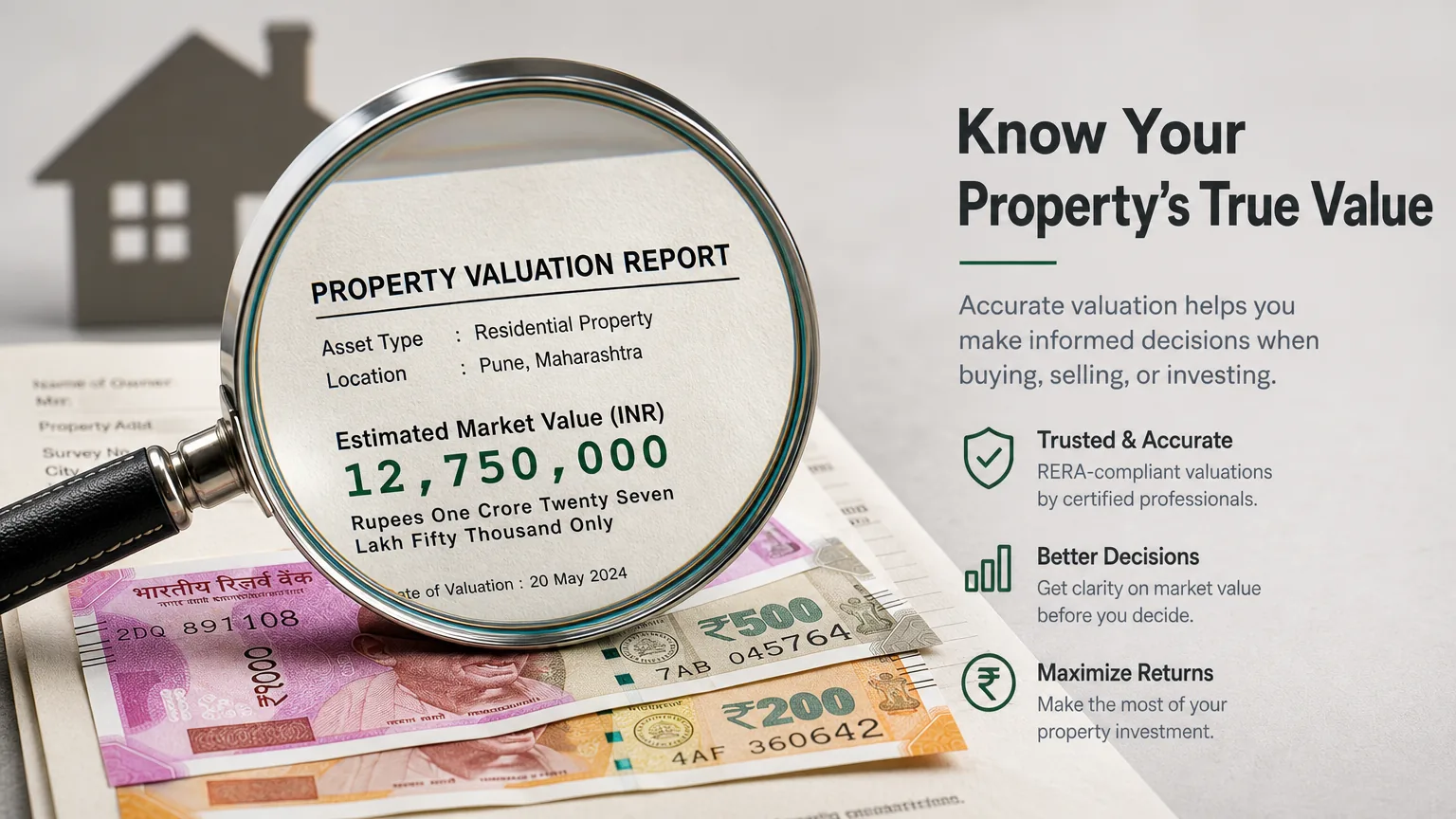
A benchmark valuation is a standardized reference point for property in India. It serves as an official baseline for purposes like taxation, legal compliance, and financial institutions.
What is a benchmark valuation?
A benchmark valuation is a standardized reference point for property value. It is a foundational value used for specific purposes, such as calculating stamp duty, registration fees, and capital gains tax. This valuation is not always the same as the market price.
What is a benchmark value?
A benchmark value is the official minimum value of a property, determined by government guidelines and formulas. This value is used for taxation, legal compliance, and as a baseline for financial institutions. The market value, which is the price a willing buyer would pay a willing seller, can be higher or lower than the benchmark value.
What is the process of benchmark valuation?
Benchmark valuation is the process of determining a standardized reference point for property value. This process combines government-set rates, such as the Circle Rate, with specific details about the property. The resulting valuation is crucial for calculating stamp duty, registration fees, and capital gains tax, and for use by financial institutions and in legal matters.
What is the core purpose of a benchmark valuation?
A benchmark valuation is a standardized reference point for property value. It serves as an official baseline for specific purposes.
For taxation, this value is crucial for calculating stamp duty and registration fees when you buy or sell property. It also helps determine your capital gains tax. For legal compliance, courts and legal systems use it in property disputes, inheritance settlements, and to ensure fairness in transactions. For financial institutions, banks and other lenders use benchmark valuations as a baseline to determine how much they can lend you against your property. This impacts your loan-to-value (LTV) ratio for mortgages and loans against property. For due diligence, understanding the benchmark value gives you a starting point to assess if a property's asking price is reasonable compared to official records.
How is a benchmark valuation calculated in India?
Calculating a benchmark valuation is a formulaic process. It combines government-set rates with specific details about your property.
What is the role of government guideline value (Circle Rate)?
The most important component is the government guideline value, often called the Circle Rate, Ready Reckoner Rate, or Collector Rate. This is the minimum value set by state governments or local authorities for property in a specific area.
This rate acts as the floor price for property transactions. You cannot register a property for less than its circle rate, even if you sell it for less. For example, if the circle rate for an apartment in a particular zone in Bangalore is ₹5,000 per square foot, you cannot register a sale at ₹4,500 per square foot. The stamp duty and registration fees will be calculated based on at least ₹5,000 per square foot.
Which property-specific factors are considered?
While the circle rate provides a base, a valuer also assesses several property-specific attributes to arrive at the final benchmark value.
Location: Proximity to main roads, markets, public transport, and key infrastructure significantly impacts value.
Property Type: Property type can be residential, commercial, industrial, or agricultural land. Each type has different valuation parameters.
Age & Condition of Building: Older structures generally incur depreciation, which reduces their value.
Size & Layout: The built-up area, carpet area, and the overall layout of the property are critical measurements.
Amenities: Features like parking, lifts, power backup, security systems, and common facilities add to the value.
Legal Status: A clear title and approved building plans are essential for a property to fetch its full value.
Is a benchmark valuation the same as market value?
No, benchmark valuation and market value are different but related.
| Feature | Benchmark Valuation | Market Value |
|---|---|---|
| Determined By | Government guidelines and formulas | Buyer-seller demand and supply |
| Purpose | Taxation, legal compliance, loan baseline | Price discovery for a sale |
| Flexibility | Rigid, formula-based | Dynamic, changes with sentiment |
| Example | The minimum value for stamp duty | The price you actually sell or buy for |
The market value is what a willing buyer would pay a willing seller in an open market. It can be higher or lower than the benchmark value, depending on current demand, property condition, and other factors. The benchmark value is simply the official minimum.
When do I need a professional benchmark valuation report?
You cannot simply write down a number yourself when an official valuation is needed. You need a professional, government-approved report in several key situations.
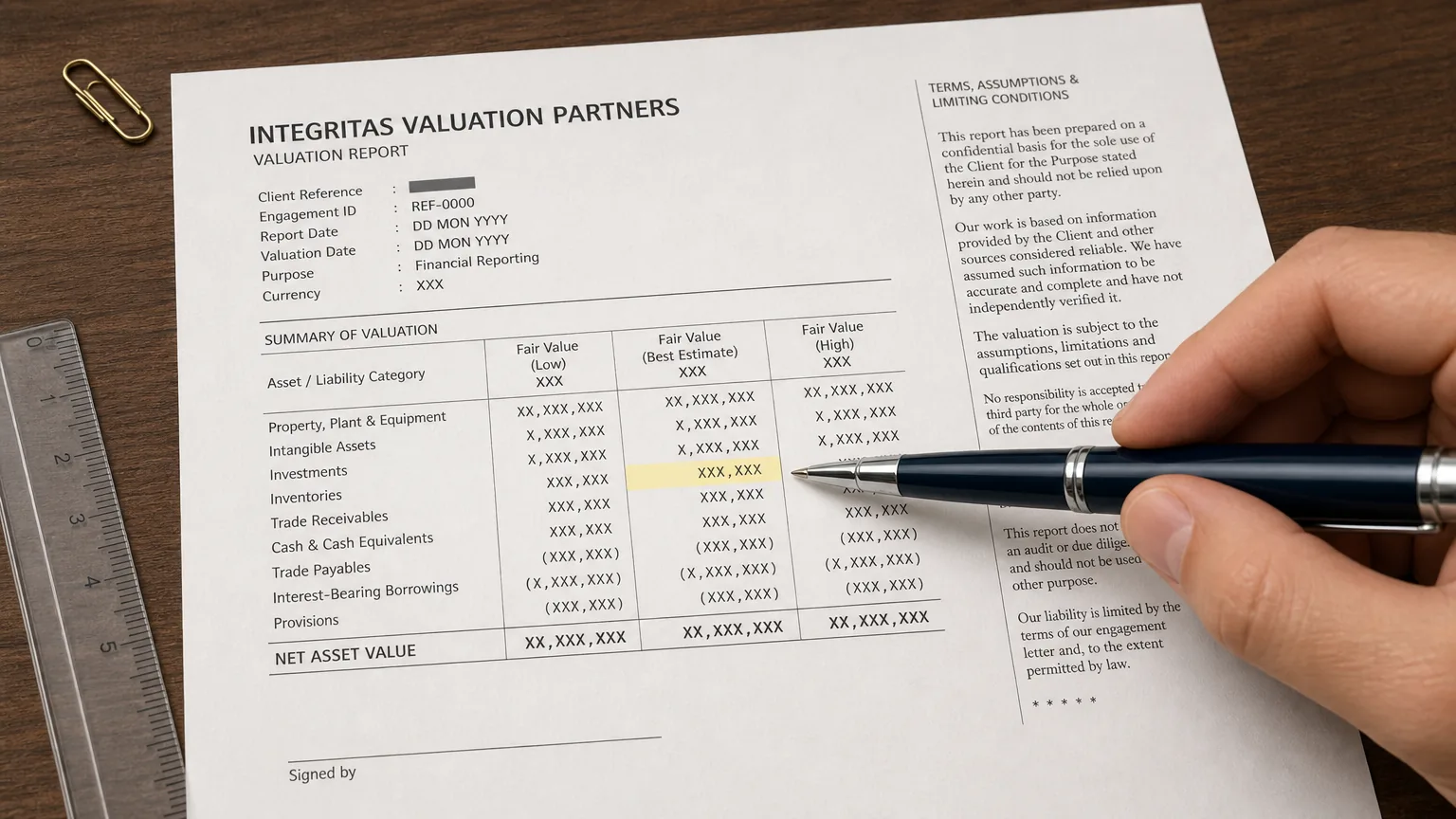
You need a professional report when applying for a home loan or a loan against property. Banks require this to assess risk and loan-to-value ratios. You need a professional report during the sale or purchase of a property to correctly calculate stamp duty and registration fees. You need a professional report for visa applications that require proof of net worth. Embassies need official documentation. You need a professional report in legal matters like divorce settlements, property division, or inheritance disputes. You need a professional report for accurately calculating capital gains tax, especially if you sold property held for many years. This is crucial if you inherited property or bought it before April 2001, as you need the fair market value as of April 1, 2001, for indexation benefits.
Why choose a government-approved valuer?
For any of the scenarios above, the report must come from a government-approved valuer. This is not just a suggestion; it is a requirement for your report to be accepted by official bodies.
Reports from approved valuers, like Rao Valuers, are accepted by banks, courts, the Income Tax Department, and government departments across India. Rao Valuers follows standardized, unbiased procedures mandated by authorities. This ensures your valuation is fair and defensible. An approved valuation report is legally sound. For instance, for capital gains tax calculations, the Income Tax Department will only accept a valuation from a registered valuer. Rao Valuers understands the nuances of different state-specific circle rates and local regulations. What applies in Maharashtra might be different in Tamil Nadu or Delhi, and Rao Valuers' valuers are experts in these regional variations.
How can I get a benchmark valuation for my property?
Getting a benchmark valuation for your property is a straightforward process with Rao Valuers. Rao Valuers makes it easy, fast, and reliable.
1. Submit an Inquiry: Contact the Rao Valuers team with your property details through the simple online form or by calling. You can even reach Rao Valuers via WhatsApp for a quick response.
2. Document Submission & Site Visit: Rao Valuers will guide you on the required documents and schedule a site visit by a local, certified valuer.
3. Receive Your Official Report: Get a comprehensive, government-approved valuation report delivered to you within 48 to 72 hours. This report is valid for all legal and financial purposes.
Rao Valuers has 35 years of experience in property valuation and is IBBI registered (IBBI/RV/02/2019/10843) and ISO 9001 certified. Rao Valuers' reports go through banks, tax offices, and courts without coming back with questions.
Get a free valuation quote or consultation via WhatsApp today.
Checked by Parish Rao, Chartered Engineer and Government Approved Valuer (Registration number CAT-I/443/117/2000-01).
Page last checked on 8 November 2026.
Get a free valuation quote
Tell us what you need valued. We will message you on WhatsApp with which report you need and what it costs, free of charge.
In a hurry? Call +91 98681 69747 instead.