
What Banks Check in a Property Valuation Report for a Loan
When you apply for a mortgage in India, such as a home loan or a loan against property (LAP), the bank requires an independent, expert assessment of the property's value and condition. This is where the property valuation report becomes essential.
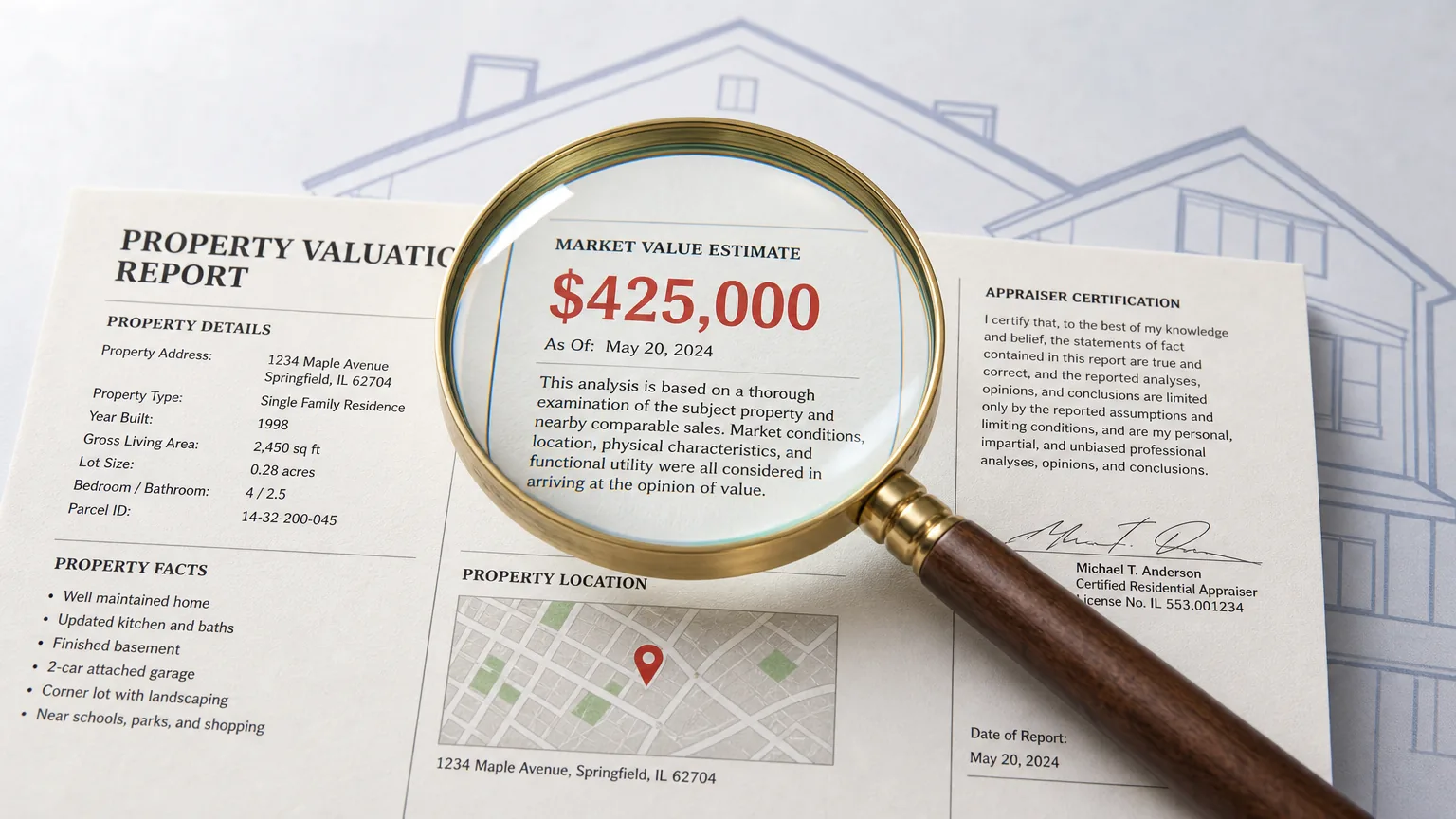
When you apply for a mortgage in India, such as a home loan or a loan against property (LAP), the bank requires an independent, expert assessment of the property's value and condition. This is where the property valuation report becomes essential. It focuses on what the property is worth on the open market today, not simply what you paid for it.
Why Banks Need an Independent Valuation Report
Banks commission an independent valuation report to obtain an unbiased, expert assessment of a property's Fair Market Value (FMV) and to verify its legal and physical condition. This report is a primary tool for risk management. It ensures the property's value is sufficient to cover the loan amount in case of default. A trusted report protects both you and the lender.
What Banks Check in a Property Valuation Report
This checklist outlines what a standard valuation report covers, so you know what to expect and can prepare.
- Legal Verification: The valuer confirms the property's ownership and legal status, and checks for any disputes. They review documents such as the title deed, sale agreement, property tax receipts, and building approval plans. You should have your Title Deed, Encumbrance Certificate, latest property tax receipt, and approved building plan ready.
- Property Identification and Location: The report confirms the exact address, GPS coordinates, and neighborhood characteristics. Lenders assess the area's infrastructure and connectivity, along with its future development potential.
- Building Specifications and Condition: The valuer documents the property's age, quality of construction, layout, total built-up area versus carpet area, and current state of repair. Banks primarily consider carpet or built-up area for valuation. Carpet area is the actual usable area inside your home, built-up area includes outer walls and common spaces, and super built-up area adds a share of common amenities.
- Amenities and Features: The report lists internal features, such as a modular kitchen or flooring type, and external amenities like parking, a lift, or security.
- Market Value Assessment: This is the most critical part. The valuer uses multiple methods to arrive at the Fair Market Value. The 'Sales Comparison Method' is most common for residential properties. This involves comparing your property with recent sales of similar properties in the locality. The report will usually include details of at least 2 to 3 comparable properties.
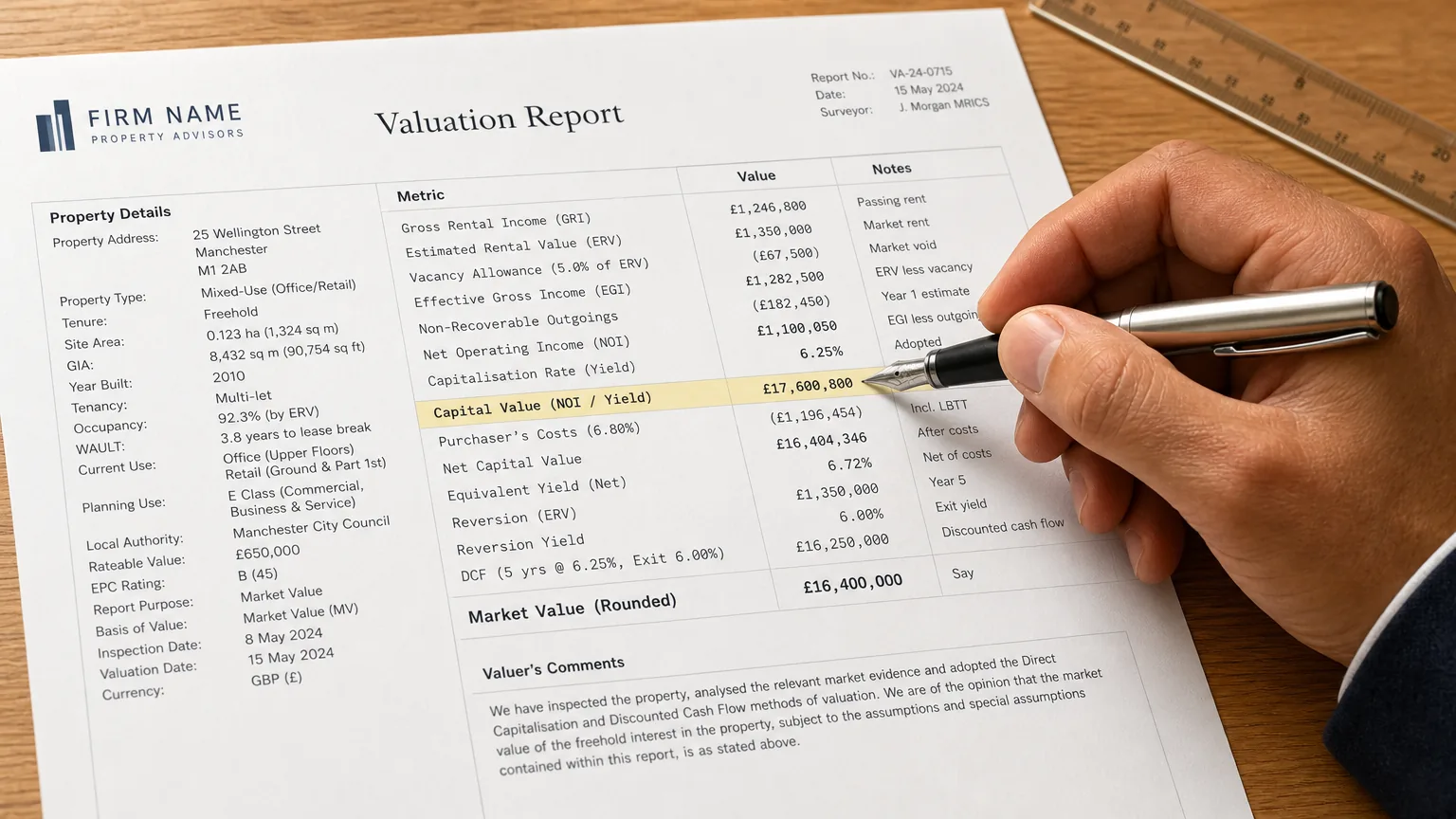
- Insurable Value and Forced Sale Value: The report also includes these two figures. Insurable Value is the cost to rebuild the property. Forced Sale Value, also called Distress Sale Value, is the lower price it might fetch in a quick auction, often 70-80% of market value. Banks use the Forced Sale Value for their risk calculations.
What Happens During the Valuer's Site Inspection
The site visit is a mandatory step for any bank-approved valuation. It is how the valuer obtains firsthand information.
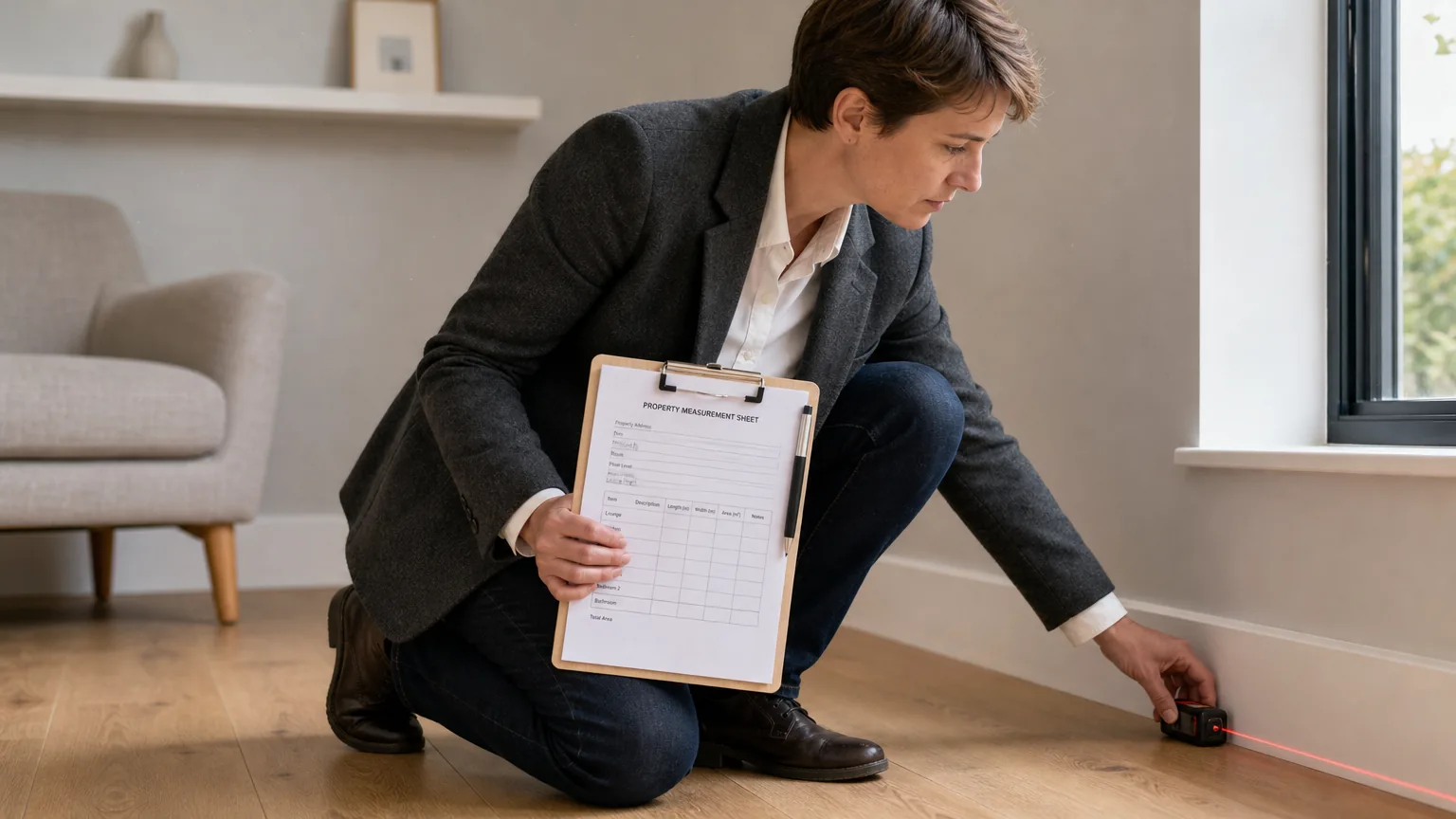
During the visit, the valuer will:
- Take precise measurements of the property to verify the area mentioned in the documents.
- Take photographs of the exterior, interior, and surrounding streetscape as evidence.
- Assess the quality of construction, fixtures, and overall maintenance level.
- Note any unauthorized constructions or deviations from the approved plan.
- Verify the property's boundaries and check for any encroachments.
Why Banks Insist on Empanelled or Independent Valuers
Banks require a report free from influence by either the buyer or the seller. An independent valuer provides an objective assessment, which is crucial for the bank's lending decision.
- Impartiality: An independent valuer provides an objective assessment, crucial for the bank's lending decision.
- Standardization and Accountability: Empanelled valuers follow specific formats and guidelines set by the bank, ensuring consistency. They are accountable to the bank for the accuracy of their report.
- Regulatory Compliance: Recent bank guidelines increasingly prefer or require valuers to be registered with the Insolvency and Bankruptcy Board of India (IBBI). This ensures a higher standard of professional expertise and ethical conduct. For example, eligibility documents from major lenders like SBI (updated September/October 2026) explicitly state their preference for IBBI-registered valuers for certain property categories, reinforcing this industry-wide shift towards higher standards. You can find more information on IBBI regulations at the official IBBI website: https://ibbi.gov.in/.
Your Next Step for a Smooth Loan Application
A thorough, professional valuation report is a critical step that protects both you and the lender. By understanding what valuers look for, you can prepare your documents and property, ensuring a faster and smoother loan approval process. This process protects you from potential issues and helps the bank make a sound lending decision.
Rao Valuers provides government-approved and IBBI registered property valuation reports (IBBI/RV/02/2019/10843) across India. With 35 years of experience, our reports are accepted by banks, the Income Tax Department, courts, and embassies, simplifying complex processes for individuals and entities. If you are preparing for a loan application or need a government-approved valuation for any purpose, our team of expert valuers is here to help.
Get a free valuation quote: https://www.raovaluers.in/contact/
Checked by Parish Rao, Chartered Engineer and Government Approved Valuer (Registration number CAT-I/443/117/2000-01).
Page last checked on 8 November 2026.
Get a free valuation quote
Tell us what you need valued. We will message you on WhatsApp with which report you need and what it costs, free of charge.
In a hurry? Call +91 98681 69747 instead.