
How to Find a Government-Approved Property Valuer in India
To find a government-approved property valuer in India, check the official directory of the Institution of Valuers (IOV) or the list of valuers registered with the Insolvency and Bankruptcy Board of India (IBBI).
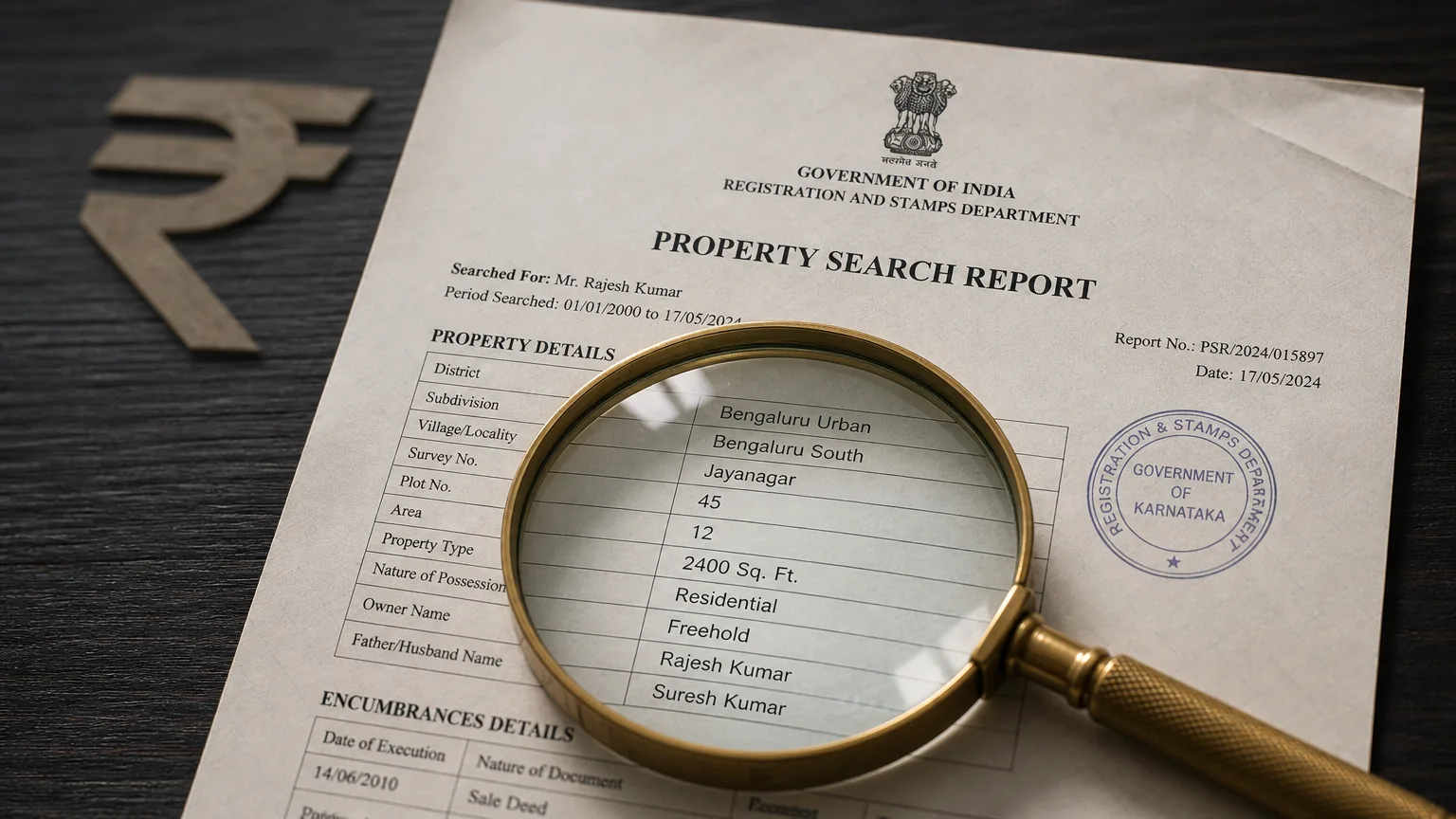
To find a government-approved property valuer in India, check the official directory of the Institution of Valuers (IOV) or the list of valuers registered with the Insolvency and Bankruptcy Board of India (IBBI). For capital gains tax, ensure the valuer is also approved under Section 34AB of the Wealth Tax Act, 1957, to determine the Fair Market Value (FMV) as of April 1, 2001.
Why do I need a government-approved property valuer?
You need a government-approved property valuer because official bodies like the Income Tax Department, banks, and embassies require a valuation report from a recognized and regulated expert. A simple estimate will not suffice for significant financial transactions involving property in India. This is a legal necessity that protects you from potential penalties. It also ensures your transactions are compliant.
What is the difference between an estimate and an official valuation?
An estimate is a quick, informal guess at a property's worth, often given by a local broker or an online tool. An estimate lacks legal standing. It does not involve a detailed inspection or a review of property documents. It also does not apply standardized valuation methodologies. An official valuation is a comprehensive, legally binding document prepared by a qualified and government-approved professional. This report details the property's characteristics, location, and legal status to arrive at a specific value based on established principles. For capital gains tax, the valuer must determine the Fair Market Value (FMV) as of April 1, 2001, which an estimate cannot provide. The report is signed and sealed. This is the only type of report accepted by official bodies.
What are common reasons to need a government-approved property valuation?
You will need a government-approved valuation report for several key reasons, including capital gains tax, bank loans, visa applications, and legal disputes.
- Capital Gains Tax: When you sell a property in India, you are liable to pay capital gains tax on the profit. To calculate this correctly, especially for properties acquired before April 1, 2001, you need an official valuation to establish the Fair Market Value (FMV) as of that date. This value is crucial for indexation benefits, which can significantly reduce your tax liability.
- Bank Loans and Mortgages: Banks require an official valuation before sanctioning a loan against property or a home loan. This helps banks assess the collateral's true worth. It also helps banks determine the loan-to-value (LTV) ratio.
- Visa and Immigration Applications: Many countries require applicants to provide proof of net worth, including property assets, for visa or immigration purposes. An official valuation report from a government-approved valuer is often a mandatory document.
- Legal Disputes: A neutral, expert valuation is essential for a fair settlement in cases of property division during a divorce or an inheritance dispute. Courts often rely on these reports to make informed decisions.
- Income Tax Return (Schedule AL): For high-net-worth individuals, reporting assets in Schedule AL of their Income Tax Return might necessitate an official valuation.
Where can I find registered property valuers in India?
You can find registered property valuers in India through official sources like the Institution of Valuers (IOV) directory, the IBBI Registered Valuers list, and local bank panels. Relying on unofficial sources can lead to reports that are rejected by authorities.
What is the Institution of Valuers (IOV) Directory?
The Institution of Valuers (IOV) is a professional body for valuers in India that maintains a directory of its members. Many government departments and public sector undertakings recognize IOV membership as a mark of credibility. You can search their online directory to find valuers based on your location and specific property type. For tax-related valuations, you should also confirm if the valuer holds specific government approvals.
What is the IBBI Registered Valuers List?
The Insolvency and Bankruptcy Board of India (IBBI) maintains a list of "Registered Valuers" who are authorized to conduct valuations under various laws, including the Companies Act and the Insolvency and Bankruptcy Code. These valuers undergo rigorous training and examination. For any official valuation, particularly for corporate or complex matters, an IBBI registered valuer is often a requirement. Many valuers who are government-approved for tax purposes are also IBBI registered.
Can I get recommendations from local bank panels?
Yes, many nationalized and private banks maintain their own panels of approved property valuers. If you are seeking a valuation for a bank loan, it is often best to ask your bank for their list of empaneled valuers. These valuers are already vetted by the bank and understand their specific requirements. This can streamline the loan application process.
How do I compare property valuers?
Choosing the right valuer is critical to ensure your report is accepted by official bodies. Compare valuers based on their government approval, speed, primary use case, cost, and direct contact.
| Feature | Independent Valuer (like Rao Valuers) | Valuer from a Large Institution (e.g., IOV) | Local Unregistered Broker |
|---|---|---|---|
| Govt. Approval | Yes (IBBI & Section 34AB) | Yes (IOV Membership) | No |
| Speed | Fast (Typically 48-72 hours) | Variable, can be slower | Fast, but not legally valid |
| Primary Use Case | Capital Gains, Visa, Bank Loans, Legal | All official purposes | Informal price checks only |
| Cost | Moderate, fixed fee | Can be higher | Low, often a commission |
| Direct Contact | Yes, direct access to the valuer | Often through an administrator | Yes |
When speaking with a potential valuer, ask these key questions:
- Are you government-approved and IBBI registered? This is non-negotiable for official purposes.
- Are you approved under Section 34AB of the Wealth Tax Act, 1957? This is crucial for capital gains tax valuations, especially for properties acquired before April 1, 2001.
- How much experience do you have with valuations for capital gains tax? Look for valuers who understand the nuances of FMV as on April 1, 2001, and indexation.
- What is your turnaround time for a report? This is important if you are on a tight deadline.
- What documents will I need to provide? A professional valuer will give you a clear list upfront.
- What is your fee structure? Ensure it is a fixed fee and there are no hidden charges.
- Can you provide a sample report (with sensitive data redacted)? This gives you an idea of the report's quality and detail.

What is the valuation process for capital gains tax?
The valuation process for capital gains tax involves understanding Fair Market Value (FMV) as on April 1, 2001, providing necessary documents, and receiving a comprehensive report. This process is about a legally compliant assessment that can significantly affect your tax liability.
What is Fair Market Value (FMV) as on April 1, 2026?
For properties acquired before April 1, 2001, the Income Tax Act allows you to choose between the actual cost of acquisition and the Fair Market Value (FMV) of the property as on April 1, 2001, for calculating capital gains. This is a significant benefit because property values have generally appreciated considerably since 2001. Opting for the FMV as on April 1, 2001, allows you to benefit from a higher base cost, thereby reducing your taxable capital gains. Determining this FMV requires a government-approved valuer who is specifically qualified to make such an assessment. They will consider factors like property size, location, and construction quality using historical data and recognized valuation methods. Without an official report establishing this FMV, the Income Tax Department may not accept your chosen base cost, potentially leading to a higher tax bill.
What is a "Benchmark Valuation"?
A "benchmark valuation" often refers to the Fair Market Value as on April 1, 2001, especially in the context of capital gains tax. It is the baseline value against which future appreciation is measured for tax purposes. This benchmark is critical because it allows you to apply the Cost Inflation Index (CII) from the financial year 2001-02 onwards, further reducing your taxable gain. An accurate benchmark value for your property can save you a substantial amount in taxes.
What documents will I need to provide for a valuation?
To ensure an accurate and compliant valuation, your valuer will require a set of documents. Having these ready will speed up the process.
- Property Documents: Sale deed, title deed, mutation records, property tax receipts, occupancy certificate, building plan approvals.
- Historical Records: Any documents related to the original purchase, construction costs, or improvements made to the property before April 1, 2001.
- Identity and Address Proof: Your PAN card, Aadhaar card, and proof of current address.
- Site Plan/Layout: If available, a detailed plan of the property.
- Photographs: Recent photographs of the property.
The valuer will conduct a physical inspection of the property and cross-reference the provided documents to ensure consistency and accuracy.
What should I expect in the final valuation report?
A comprehensive valuation report for capital gains tax will typically include an executive summary, property details, purpose of valuation, basis of valuation, assumptions and limiting conditions, a valuation certificate, and annexures.
- Executive Summary: A brief overview of the valuation and its purpose.
- Property Details: Full description of the property, including its location, size, and physical characteristics.
- Purpose of Valuation: Clearly stating that the valuation is for capital gains tax calculation, specifically for determining FMV as on April 1, 2001.
- Basis of Valuation: The methodologies used to arrive at the FMV, such as the comparative sales method or cost method, adapted for historical data.
- Assumptions and Limiting Conditions: Any specific assumptions made or limitations encountered during the valuation process.
- Valuation Certificate: The final certified value, signed and sealed by the government-approved valuer.
- Annexures: Copies of key documents reviewed, photographs, and other supporting evidence.
The report should be clear and robust enough to withstand scrutiny from the Income Tax Department.
Work with Rao ValuersWhat is Rao Valuers' experience in property valuation?
Rao Valuers has been performing valuations since 1995, offering over 30 years of experience with the real estate market and regulatory landscape in India. Rao Valuers is a government-approved and IBBI-registered valuer. The team provides reports for capital gains, including the critical 2001 FMV assessment, as well as for bank loans and court matters. Rao Valuers' standard turnaround time for a comprehensive valuation report is 48 to 72 hours. Reports are meticulously prepared, ensuring they are accepted by banks, the Income Tax Department, and embassies without questions.
Frequently Asked Questions (FAQ)
How much does a property valuation cost in India?
The cost of a property valuation in India varies depending on the property type, its location, and the valuer's experience. Generally, valuers charge a fixed fee, not a percentage of the property value. It is always best to get a clear, upfront quote from the valuer before proceeding. A correct valuation can save you significantly more in taxes or prevent issues with official bodies.
Is a valuation from an IBBI registered valuer valid everywhere?
Yes, a valuation from an IBBI registered valuer is generally valid across India for purposes where IBBI registration is mandated, such as under the Companies Act or Insolvency and Bankruptcy Code. For other purposes like capital gains tax, while IBBI registration is a strong indicator of credibility, the valuer also needs to be specifically approved under Section 34AB of the Wealth Tax Act, 1957, to provide the FMV as on April 1, 2001.
What is the difference between Fair Market Value and the Circle Rate?
The Circle Rate, also known as the Ready Reckoner Rate, is the minimum price at which a property can be registered in a particular area. It is set by the state government for stamp duty purposes. Fair Market Value (FMV) is the actual price a property would fetch in the open market, based on demand and other market factors. FMV is typically higher than the Circle Rate. For capital gains tax, it is the FMV that is relevant for calculation, especially as on April 1, 2001.
How long does it take to get a property valuation report?
The time it takes to get a property valuation report depends on the valuer's efficiency and the property's complexity. For a standard residential property, a government-approved valuer can typically provide a report within 48 to 72 hours after all necessary documents are submitted and the property inspection is completed. More complex commercial or industrial properties might take longer.
Can I get a property valuation done for a property in a different city?
Yes, you can get a property valuation done for a property in a different city. Many government-approved valuers have networks of qualified professionals across India or are authorized to conduct valuations nationwide. You should ensure the valuer you choose has experience or local associates in the specific city where your property is located to ensure accurate market assessment.
What is Section 34AB of the Wealth Tax Act and why does it matter for valuers?
Section 34AB of the Wealth Tax Act, 1957, specifies the qualifications for valuers to be registered with the Chief Commissioner or Director General of Income Tax for valuing assets for tax purposes. While the Wealth Tax Act itself has been abolished, the registration under Section 34AB remains crucial for valuers to provide official reports. This is particularly true for determining the Fair Market Value as on April 1, 2001, for capital gains tax purposes. This registration signifies that the valuer is authorized by the Income Tax Department to provide such assessments, making their reports legally binding.
If you require a government-approved valuation report for capital gains, a bank loan, or visa purposes, you can get a free, no-obligation quote from our senior valuers. Rao Valuers provides compliant reports across India within 72 hours.
Checked by Parish Rao, Chartered Engineer and Government Approved Valuer (Registration number CAT-I/443/117/2000-01).
Page last checked on 6 October 2026.
Get a free valuation quote
Tell us what you need valued. We will message you on WhatsApp with which report you need and what it costs, free of charge.
In a hurry? Call +91 98681 69747 instead.