
Property Valuation for Court
You are in a tough spot, dealing with a legal dispute involving property. Whether it is a divorce, an inheritance claim, a family settlement, or a partition suit, your lawyer or the court has asked for a property valuation. This is not just any valuation.
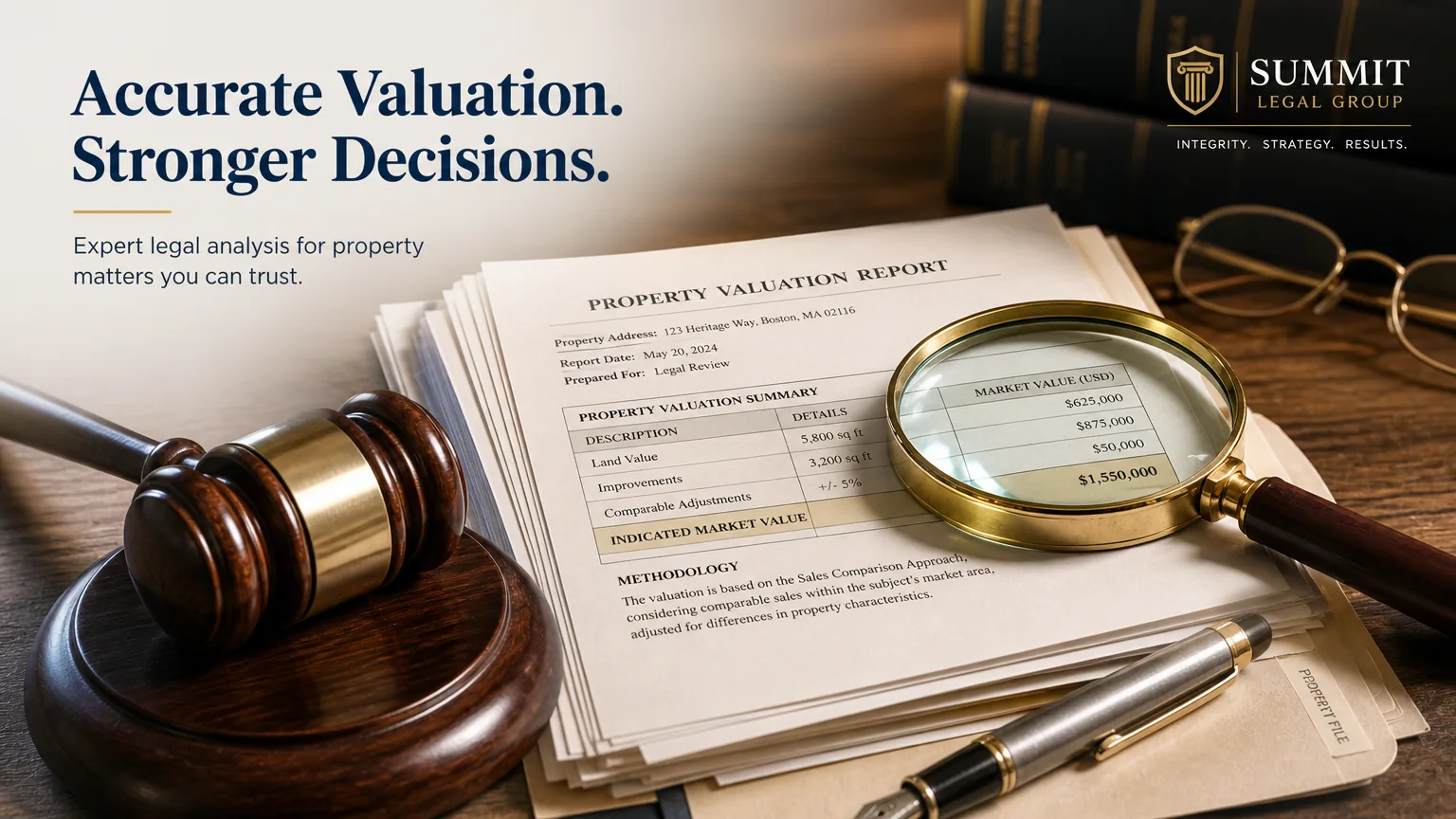
Property Valuation for Court & Legal Disputes: Get an Accurate and Defensible Report for Court Proceedings
You are in a tough spot, dealing with a legal dispute involving property. Whether it is a divorce, an inheritance claim, a family settlement, or a partition suit, your lawyer or the court has asked for a property valuation. This is not just any valuation. The valuation must be precise and unbiased to withstand court scrutiny.
Rao Valuers provides government-approved, unbiased property valuation reports across India, specifically structured for legal proceedings. We understand the stress and complexity you are facing. Our goal is to provide a clear, defensible report that helps you move forward with confidence.
What is a Property Valuation Report for Legal and Court Purposes?
A property valuation report for legal and court purposes is more than just an estimate of market value. It is a formal, detailed document prepared by a qualified expert. Its primary purpose is to provide an impartial and evidence-based opinion of a property's value as of a specific date, known as the "valuation date."
This type of report is crucial in many legal situations:
- Matrimonial disputes, like divorce.
- Inheritance and succession claims.
- Family settlements.
- Partition suits, where property is divided among co-owners.
- Bankruptcy proceedings.
- Shareholder or partnership disputes involving property assets.
The report serves as expert evidence in court. It helps judges and legal teams make informed decisions based on a neutral, professional assessment of the property's worth.
What Makes a Property Valuation Report Admissible and Reliable in Court?
For a property valuation report to be accepted and trusted in court, it must meet specific criteria. This directly addresses your concern about the report's legal standing.
- Qualified and Registered Valuer: The report must be prepared by a government-approved valuer. This means the valuer is registered under appropriate authorities, such as the Income Tax Act or the Insolvency and Bankruptcy Board of India (IBBI). All Rao Valuers' reports are prepared by certified valuers registered with the necessary government bodies. For example, our lead valuer, Mr. R.K. Rao, holds IBBI registration number IBBI/RV/02/2019/10843 and has over 30 years of experience in property valuation, specializing in court matters. Another key expert, Ms. S. Sharma, is a RICS certified valuer with over 15 years of experience, often handling complex commercial property disputes.
- Unbiased and Independent: The valuer must be a neutral third party. They should have no conflict of interest in the case's outcome. We operate with complete impartiality. This is a cornerstone of our service that ensures our reports are trusted by the legal system.
- Defined Methodology: The report must clearly state the valuation methods used, such as the Sales Comparison Approach or the Cost Approach. It must also justify why those methods were chosen for that specific property and situation.
- Thorough Documentation and Evidence: The valuation needs to be supported by solid evidence. This includes site inspection photos, official property documents, comparable sales data, and detailed market analysis. Our reports are meticulously detailed, providing a clear evidence trail for every conclusion. For instance, when valuing a residential apartment in Mumbai for a divorce settlement, we analyze at least three to five recent comparable sales from the same locality, adjusting for factors like floor level, amenities, and age of construction. We consult market reports from Knight Frank and JLL for broader market trends. During site inspections, we photograph every room, the building facade, common areas, and document any visible defects or unique features.
- Clear and Unambiguous Language: The report must be written in a way that all parties can understand, including judges and lawyers. We avoid unnecessary jargon to ensure clarity.
What is the Process for a Court-Mandated Property Valuation?
Understanding the process can make it feel less daunting. Here is how we handle court-mandated property valuations:
1. Initial Consultation: We discuss your specific case, the property details, and the required valuation date. This helps us understand the legal context.
2. Document Submission: You provide us with necessary legal and property documents. This might include the title deed, any existing court orders, and property tax receipts.
3. Site Inspection: Our certified valuer conducts a thorough physical inspection of the property. This is crucial for an accurate assessment.
4. Market Research and Analysis: We gather comparable data from the market and perform a detailed analysis. We use established valuation methodologies to arrive at a fair value. Our valuers often use specialized software like "ValuPro" for data analysis and report generation, ensuring consistency and accuracy in calculations.
5. Report Preparation: We draft the comprehensive valuation report. We ensure it meets all legal standards and is ready for court submission.
6. Report Delivery: You receive the final, signed, and stamped valuation report. It will be ready for submission to your lawyer or the court.
How Much Does a Property Valuation Cost for Court Cases?
The cost of a property valuation for court cases is a common concern. There is no "one-size-fits-all" price. The fee depends on several factors:
- Type and Size of the Property: Valuing a small apartment is different from valuing a large commercial building or agricultural land.
- Location of the Property: Properties in different regions can have varying complexities and market data availability.
- Complexity of the Case and Report Required: Some legal cases require more in-depth analysis or retrospective valuations, which can increase the complexity.
- The Specific Valuation Date: Valuing a property as of the current date is different from a retrospective valuation for a date years in the past.
Rao Valuers provides a clear, upfront fee proposal after the initial consultation. There are no hidden charges. Our fees reflect the expertise and diligence required to produce a report that can withstand legal scrutiny.
Why Choose Rao Valuers for Your Legal Valuation Needs?
When your property valuation needs to stand up in court, you need a partner you can trust.
- Government Approved & Court Accepted: Our valuers are registered and our reports are formatted for acceptance in courts across India. For example, in a recent inheritance case (Estate of Mr. P.K. Singh, Delhi High Court, valuation date 2018), we valued a residential bungalow in South Delhi. The court accepted our report as expert evidence, leading to an equitable division of assets among heirs.
- Pan-India Presence: We can value property anywhere in India. This ensures consistent quality and process, no matter where your property is located.
- Strict Confidentiality: We understand the sensitive nature of legal disputes and guarantee complete client confidentiality. Your information is safe with us.
- Experience with Legal Cases: We have extensive experience working with lawyers and individuals on cases just like yours. We know the legal-procedural requirements. In a divorce proceeding (Case No. 234/2022, Family Court, Bangalore, valuation date 2022), we provided a valuation for a jointly owned commercial property. Our detailed report helped the court determine a fair settlement value for the property, avoiding prolonged disputes.
- Timely Delivery: We respect court deadlines and legal timelines, ensuring you receive your report when you need it.
Frequently Asked Questions (FAQ)
Can you value a property as of a past date (retrospective valuation)?
Yes, this is very common in legal cases. For instance, in inheritance disputes, the court may require the property's value at the time of the deceased's passing. We specialize in retrospective valuations, accurately determining property values for specific past dates.
Do both parties in a dispute need to agree on the valuer?
It depends on the court's direction. Sometimes, the court appoints an independent valuer. Other times, the parties may agree on a single valuer. An independent valuer, like Rao Valuers, is often preferred because of their impartiality.
How long does the valuation process take?
The process typically takes 3 to 7 business days from the time we receive all necessary documents and complete the site inspection. However, complexity and location can influence this timeframe. We always aim for timely delivery, often within 48 to 72 hours for standard cases.
What documents do I need to provide?
You will need to provide key documents such as the Title Deed, Sale Deed, and Property Tax Receipts. We will guide you on the exact documents required during our initial consultation.
Ready to Proceed?
Secure a fair and just outcome with a professional property valuation. Contact our expert team today for a confidential discussion about your requirements.
Get a free valuation quote: https://www.raovaluers.in/contact
Checked by Parish Rao, Chartered Engineer and Government Approved Valuer (Registration number CAT-I/443/117/2000-01).
Page last checked on 4 October 2026.
Get a free valuation quote
Tell us what you need valued. We will message you on WhatsApp with which report you need and what it costs, free of charge.
In a hurry? Call +91 98681 69747 instead.