
Calculate LTCG Tax on Property in India (2026 Guide)
Hi, I am Parish Rao, founder of Rao Valuers. For over 35 years, my team and I have helped property sellers across India understand their tax liabilities and secure accurate valuations. If you are selling property, you have likely heard about Long Term Capital Gain (LTCG) tax.
Hi, I am Parish Rao, founder of Rao Valuers. For over 35 years, my team and I have helped property sellers across India understand their tax liabilities and secure accurate valuations. If you are selling property, you have likely heard about Long Term Capital Gain (LTCG) tax. It can seem complex, but I am here to break it down for you. This guide will walk you through exactly how to calculate LTCG tax on property in India for 2026, step by step.
What Is Long Term Capital Gain Tax on Property?
LTCG tax applies when you sell a capital asset, like land, a building, or a house, that you have held for more than 24 months. This holding period is crucial. The Income Tax Act, specifically Section 2(42A), defines what makes an asset long-term. If you sell property held for less than 24 months, it is considered a short-term capital gain (STCG) and is taxed at your regular income tax slab rates. For assets held 24 months or more, it is LTCG, and that is what we are focusing on here.
How Is the Holding Period Calculated for Inherited or Gifted Property?
This is a common question, and it is a good one. When you receive property through a gift, inheritance, will, or family partition, your holding period includes the time the previous owner held it. This is covered under Section 49(1) of the Income Tax Act. For example, if your father bought a property in 1990 and you inherited it in 2020, then sold it in 2026, your holding period started in 1990, not 2020. This means you get the benefit of indexation from the year your predecessor acquired the asset.
What Is the LTCG Tax Rate on Property Sale in 2026?
For property, LTCG is taxed at 20% with the benefit of indexation. This is outlined in Section 112 of the Income Tax Act. On top of this 20%, you will also pay a 4% Health and Education Cess. If your total income is very high, you might also be subject to a surcharge. For NRIs, the tax rate is the same 20%, but the process for Tax Deducted at Source (TDS) is different, which we will cover later. Please note, the 10% rate without indexation you might hear about applies to listed equity shares or REIT units, not unlisted property.
What Is Indexation Benefit and How Does It Reduce Tax?
Indexation is your best friend when it comes to reducing your LTCG tax bill. It adjusts your purchase cost for inflation using the Cost Inflation Index (CII) published by the CBDT. This means you are not taxed on the nominal gain, but on the real gain after accounting for inflation. This is mandatory for property LTCG; it is not optional.
Here is the formula for Indexed Cost of Acquisition:
Indexed Cost = (Cost of Acquisition) × (CII of year of sale / CII of year of acquisition)
Let us look at the CII values for the past few years:
| Financial Year | Cost Inflation Index (CII) |
|---|---|
| 2023-24 | 348 |
| 2024-25 | 363 |
| 2025-26 | 375 (estimated) |
The base year for CII is 2001-02, with a CII of 100.
Example: You bought a property in FY 2014-15 for ₹30 lakh (CII: 240). You sell it in FY 2025-26 for ₹80 lakh (CII: 375, estimated for this example).
Indexed Cost = ₹30,00,000 × (375 / 240) = ₹46,87,500
Without indexation, your gain would be ₹80L - ₹30L = ₹50L. With indexation, your indexed cost is much higher, reducing your taxable gain significantly.
How to Calculate LTCG Tax on Property, Step-by-Step with Example
Let us put it all together with a comprehensive example.
Step 1: Compute Full Value of Consideration
This is your actual sale price. If the buyer deducted TDS, you still use the full sale price here.
Step 2: Deduct Expenses Related to Transfer
You can subtract expenses directly related to the sale, like brokerage paid by you, legal fees for the sale, or stamp duty if you paid it.
Step 3: Compute Indexed Cost of Acquisition
Use the formula we discussed: (Actual Cost) × (CII of year of sale / CII of year of acquisition).
Step 4: Compute Indexed Cost of Improvement
If you made any major capital improvements to the property (like adding a floor or a significant renovation), you can also index those costs. Use the same formula, replacing "acquisition" with the year the improvement was made. Remember, only improvements made after 1st April 2001 can be indexed.
Step 5: Calculate Long Term Capital Gain (LTCG)
LTCG = (Net Sale Consideration from Step 2) - (Indexed Cost of Acquisition from Step 3) - (Indexed Cost of Improvement from Step 4)
Step 6: Calculate Tax Payable
Tax = 20% of LTCG + 4% Health & Education Cess (+ Surcharge if applicable)
Concrete Example:
- Property bought: FY 2005-06, Cost ₹15,00,000 (CII: 117)
- Improvement: FY 2015-16, Cost ₹5,00,000 (CII: 254)
- Sold: FY 2025-26, Sale Price ₹85,00,000 (CII: 375, estimated)
- Brokerage paid by seller: ₹1,00,000
1. Full Value of Consideration: ₹85,00,000
2. Less: Expenses on Transfer: ₹1,00,000
Net Sale Consideration: ₹84,00,000
3. Indexed Cost of Acquisition:
₹15,00,000 × (375 / 117) = ₹48,00,000 (approx)
4. Indexed Cost of Improvement:
₹5,00,000 × (375 / 254) = ₹7,38,189 (approx)
5. Long Term Capital Gain (LTCG):
₹84,00,000 - ₹48,00,000 - ₹7,38,189 = ₹28,61,811
6. Tax Payable:
20% of ₹28,61,811 = ₹5,72,362
4% Cess = ₹22,894
Total Tax = ₹5,95,256

What Are the Exemptions to Avoid LTCG Tax on Property Sale?
The good news is, you can often save on LTCG tax by reinvesting your gains. Here are the main ways:
a) Section 54: Reinvestment in a Residential House
If you sell a residential house and use the LTCG to buy or construct another residential house in India, you can claim full exemption.
- Timelines: You must purchase the new house within 1 year before or 2 years after the sale, or construct it within 3 years after the sale.
- Number of Houses: You can generally invest in one residential house. However, for LTCG up to ₹2 crore, you can invest in two residential houses. This is a special provision.
- Lock-in: You cannot sell the new house within 3 years. If you do, the exemption will be reversed, and the tax will become payable.
- Partial Reinvestment: If the cost of the new house is less than your LTCG, you get a proportionate exemption.
b) Section 54F: Sale of Any Long-Term Asset (Non-Residential) and Buy a House
This exemption applies if you sell any long-term capital asset (like a plot of land, commercial property, or even shares) and use the entire net sale consideration to buy or construct a residential house in India.
- Investment: You must invest the entire net consideration, not just the gain.
- Proportionate Exemption: If you invest only part of the consideration, the exemption is proportionate.
- Timelines: Same as Section 54.
c) Section 54EC: Investment in Specified Bonds (Capital Gains Bonds)
You can claim an exemption up to ₹50 lakh per financial year by investing your LTCG in specific bonds issued by entities like NHAI or REC.
- Investment Limit: The maximum you can invest is ₹50 lakh in a financial year.
- Timelines: You must invest within 6 months of the property sale.
- Lock-in: These bonds have a lock-in period of 5 years. If you sell or transfer them before 5 years, the exemption is reversed.
- Taxable Interest: The interest you earn on these bonds is taxable. This exemption only applies to the capital gain, not the interest.
Remember, to claim these exemptions, you must file your Income Tax Return (ITR) and declare the exemption.
Do NRIs Have Different Rules for LTCG Tax on Property?
For NRIs, the calculation of LTCG (20% with indexation) is the same as for residents. However, there is a key difference in how the tax is collected.
- TDS: The buyer of your property must deduct TDS at 20% (plus surcharge and cess) on the sale consideration. This is under Section 195. Often, buyers deduct on the full consideration, and you, as the seller, will claim a refund if your actual tax liability is lower after indexation and exemptions.
- ITR Filing: Even if the tax is fully deducted at source, an NRI must file an ITR in India to report the sale and claim any refunds or exemptions.
- Repatriation: Repatriation of sale proceeds is allowed under FEMA guidelines, usually requiring a certificate from a Chartered Accountant (CA).
Is a Professional Valuation Required for LTCG Computation?
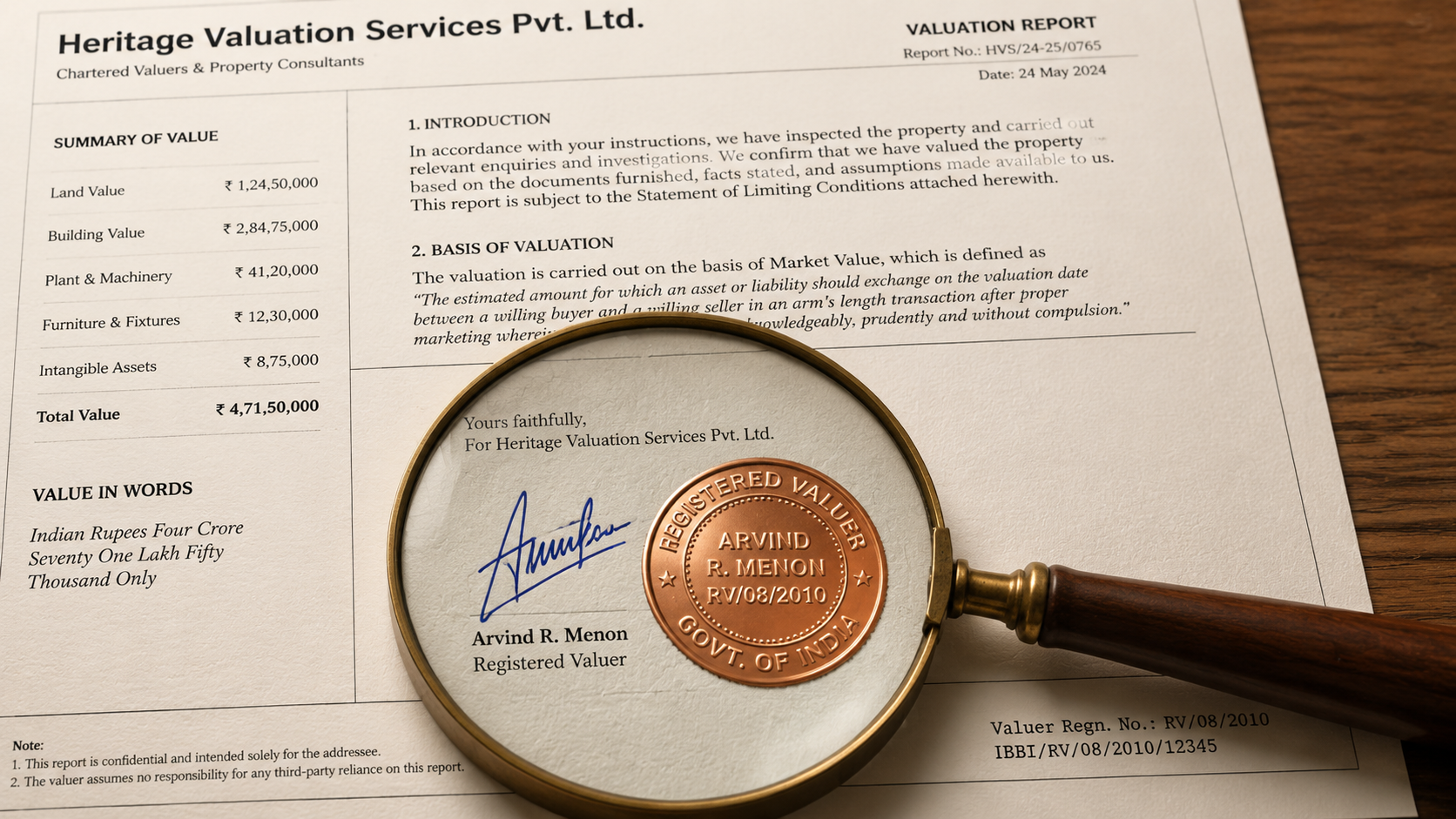
Yes, absolutely. For properties acquired before 1st April 2001, you have the option to use the Fair Market Value (FMV) as on 1st April 2001 as your cost of acquisition. This is a huge benefit because it sets a higher base for indexation, reducing your taxable gain. However, you cannot simply write down a number yourself. To support this FMV, a report from a registered valuer is mandatory.
- Section 55(2)(b)(i): This section allows you to choose between the actual cost of acquisition or the FMV as on 1st April 2001, whichever is higher, for properties acquired before this date.
- Stamp Duty Value: The FMV you claim cannot exceed the stamp duty value of the property as on 1st April 2001.
- Registered Valuer: Only a report from a government approved valuer, like Rao Valuers, is legally accepted by the Income Tax Department. This report is crucial for assessment proceedings and helps you avoid scrutiny. We have 35 years of experience providing such reports that go through banks, tax offices, and courts without coming back with questions.
How Do I Pay LTCG Tax and File ITR?
- Advance Tax: If you have a capital gain, you might need to pay advance tax in quarterly installments. The due dates are 15th June, 15th September, 15th December, and 15th March.
- Self-Assessment Tax: If you have any remaining tax liability after TDS and advance tax, you pay it as self-assessment tax before filing your ITR.
- ITR Filing: You must report your capital gains in Schedule CG of ITR-2 or ITR-3, depending on your income sources. Form 26AS will show any TDS deducted by the buyer. If you are claiming exemptions, you will provide details in the relevant sections of the ITR.
- Capital Gains Account Scheme: If you cannot reinvest the capital gain into a new house before the ITR due date, you must deposit the amount in a Capital Gains Account Scheme (CGAS) with a public sector bank.
What Happens If I Do Not Pay LTCG Tax Correctly?
It is important to get this right. Non-payment or underreporting of LTCG can lead to serious consequences:
- Interest: You will be charged interest under Section 234A, 234B, and 234C for late payment or underpayment of tax. This is typically 1% per month.
- Penalty: Under Section 270A, a penalty of up to 50% of the tax underreported can be levied. In cases of misreporting of income, it can go up to 200%.
- Scrutiny: If the stamp duty value of your property is significantly higher than your declared sale consideration (as per Section 50C), the Income Tax Department can initiate a scrutiny assessment.
- NRI Specific: If you are an NRI, and the buyer fails to deduct TDS, both you and the buyer could face penalties.
Quick Checklist for Property Seller:
- [ ] Confirm holding period exceeds 24 months.
- [ ] Gather all property documents: original sale deed, registration papers, payment receipts.
- [ ] If property was acquired before 2001, obtain a registered valuer's report for Fair Market Value as on 1st April 2001.
- [ ] Collect the Cost Inflation Index (CII) table for relevant years.
- [ ] Compute indexed cost of acquisition and indexed cost of improvement accurately.
- [ ] Identify any applicable exemption (Section 54, 54F, or 54EC).
- [ ] Ensure TDS is deducted by the buyer (if applicable) or pay advance tax yourself.
- [ ] File your Income Tax Return (ITR) with Schedule CG.
- [ ] If claiming exemption, invest in specified assets or deposit in CGAS within the stipulated timelines.
Common Mistakes to Avoid:
- Ignoring Indexation: This is a big one. Always use indexation to reduce your taxable gain.
- Missing Costs: Do not forget to include stamp duty, registration charges, and brokerage paid by you in your cost of acquisition.
- Early Sale of Exempt Assets: If you claim Section 54 or 54EC, do not sell the new house or bonds before the lock-in period ends.
- Arbitrary FMV: Do not use an online estimate or broker valuation for pre-2001 properties. Only a registered valuer's report is legally valid.
- Ignoring Section 50C: Be aware that the Income Tax Department compares your sale price to the stamp duty value. A significant difference can trigger scrutiny.
This page is an informational guide; it does not constitute tax or legal advice. I always recommend consulting a Chartered Accountant for personalized advice on your specific tax liability. Indexation is mandatory for property LTCG; there is no option to ignore it. Fair Market Value as on 1st April 2001 is an option for older properties, but a registered valuer’s report is mandatory to support FMV. Section 54 exemption applies only to residential house property, not commercial or land. NRIs face TDS at source but can claim a refund if their total income is below the taxable limit. LTCG tax is computed on net gain after indexation, not on the full sale price. CII values change yearly; ensure the latest CBDT notification is used. Joint owners must allocate cost and sale proceeds as per their share in the title (default 50:50).
Ready to ensure your property valuation is accurate and accepted by the Income Tax Department?
Get a free, no-obligation valuation quote today
Checked by Parish Rao, Chartered Engineer and Government Approved Valuer.
Page last checked on 5 September 2026.
Get a free valuation quote
Tell us what you need valued. We will message you on WhatsApp with which report you need and what it costs, free of charge.
In a hurry? Call +91 98681 69747 instead.